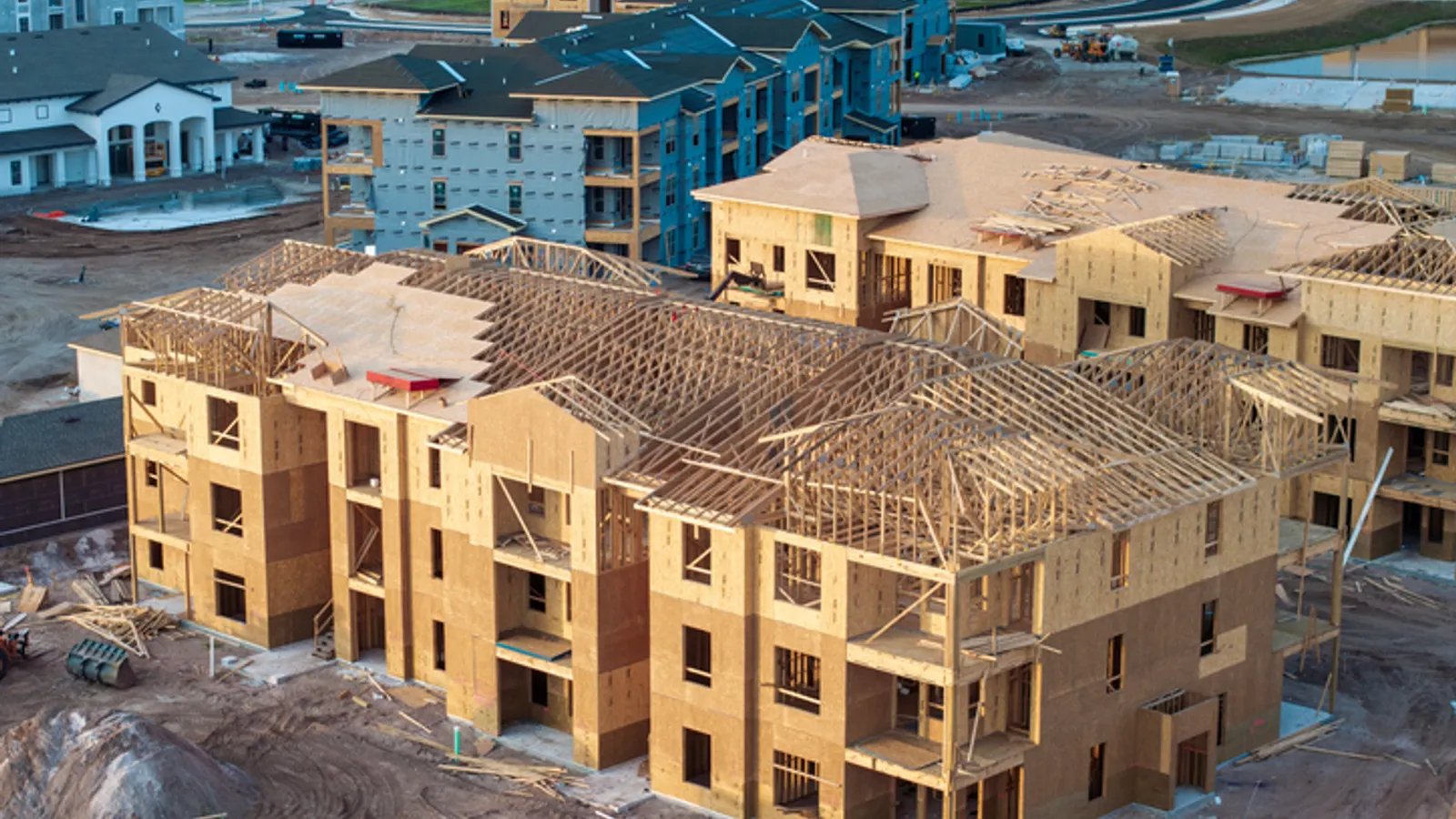
Garden apartments, townhome clusters and four-story elevator buildings are three different construction jobs that all get called multifamily. The first is a wood-frame building with exterior stairs, built in repeating units across a large site. The second is a row of attached homes with firewalls and individual entries. The third has corridors, an elevator, a rated stair and a sprinkler system that is more complex than a small building needs. We build all three in the Broken Arrow and Tulsa area, and we start by asking an owner which of them the numbers support.
The common thread is repetition. A building that has 120 nearly identical units puts a premium on getting the first unit right and then building it faster each time. That is true for framing, for mechanical, electrical and plumbing rough-in, for drywall and for finishes. We use model units, a defined production sequence and weekly lookaheads to keep the line moving, and we are open with owners about where the production line is and is not working.
The sections below describe the pressures on a multifamily budget in this market and the choices that decide whether a project closes on time.
Jobs, large projects and the labor pool
Housing demand follows jobs, and jobs in the metro are arriving in large announcements. The Tulsa Regional Chamber reported on April 22, 2026 that Meta announced a $1 billion, 2-million-square-foot data center at the 2,000-acre Fair Oaks industrial innovation park in east Tulsa, with more than 1,000 construction jobs at peak and about 100 permanent jobs. Wikipedia reports that Sofidel broke ground on June 4, 2026 on a $775 million, one-million-square-foot expansion at the Tulsa Port of Inola, and lists other large industrial proposals there.
Both kinds of projects pull on the same labor and material supply that apartments need. Framers, electricians, plumbers and concrete crews are limited, and a large project can raise the price of every trade in the region. We tell owners this plainly and recommend locking in subcontractor commitments earlier rather than later. Owners interested in the industrial side of the metro may want to see our notes on Inola, where the port and rail park are located.
From grading to the clubhouse
A multifamily package begins with site work: clearing, grading, utilities, detention, retaining of fill where necessary, parking and roadways. It then moves to foundations (slab-on-grade for many garden buildings, with post-tensioned or conventional reinforcement), framing, roofing, exterior cladding, windows, interior rough-in, drywall, cabinets, flooring, appliances, mechanical equipment and finishes. Amenities such as clubhouses, pools, fitness rooms and dog parks have their own schedules, and we plan them to be ready before the first move-ins, since prospects judge a community by its common areas.
Utilities and earthwork frequently decide the schedule. A site of 10 to 15 acres needs sewer, water, gas, electric and telecom, and the city or utility may need to approve each. The trade partners for mass grading prepare the pads and roads, and we phase building starts so the first apartments can be finished and leased while later buildings are framing.
Framing, finishes and drainage
The biggest items in an apartment budget are framing, mechanical and electrical systems, and finishes. Their prices change with commodity markets and labor availability. We price by building and by unit type, and we provide alternates for finishes such as flooring, countertops and appliance packages so an owner can see which choices have the biggest effect per unit. Exterior materials can add or save more than expected, since siding, masonry and roofing cover a lot of area.
Site conditions come next. Drainage, detention and fill are significant in this region, where heavy rain can produce rapid runoff. The National Weather Service reports that the Memorial Day flood of May 26 to 27, 1984 killed 14 people in Tulsa and damaged or destroyed more than 5,500 buildings, with Mingo Creek alone accounting for $125 million of the $180 million in damage. We do not build in a floodplain without checking what the designers and the city expect, and we price the grading, drainage and finished floor elevations that follow.
Two jurisdictions, two code editions
The statewide commercial minimum is now the 2024 International Building Code, as amended by Oklahoma, effective September 14, 2026. In Tulsa, the city's plan review page still lists the 2018 International codes for commercial permits, with an update pending January 1, 2027, so apartments in Tulsa and apartments in a neighboring city can face different reviews on the same day. For multifamily, those differences can include fire separation between units, stair and corridor design, sprinkler requirements and accessibility counts.
Accessible and adaptable units, parking ratios and landscape requirements are commonly debated with city planning staff. We ask the staff for their reading early, document it and share it with the owner's lender and the architect so everyone designs to the same set of rules.
Garden, podium, senior and student communities
Multifamily comes in several versions. A garden-style community with surface parking is the most common and the most efficient. A podium building places structured parking or retail under wood-frame apartments, and our podium and wrap construction page covers the structure in detail. Senior housing and student housing share many details with market-rate apartments, but add their own requirements, which we describe on the senior living and student housing pages.
Walkable infill projects and apartments over shops are another category, described on the multifamily and mixed-use page. Each has a different cost per unit and a different risk profile.
Draw packages and the turnover weeks
We work with developers and owners who understand how financing, construction and leasing fit together. Our multifamily developer clients tell us they want a clear schedule, early alerts and a builder who answers when lenders ask for an update. Our approach is to organize monthly draw packages with photos, cost tracking and stored materials documented, and to hold regular meetings with the architect and the property manager.
The weeks before turnover matter more than any other part of the schedule. We run punch lists building by building, hold the final cleaning until the work is done and work with the property manager on keys, appliance warranties and move-in readiness. The first residents' experience in a community has a lasting effect, and our job is to make it a good one. For infill projects inside the city, see our notes on Tulsa.
Test a multifamily site
Share the acreage, the unit count and the building type you prefer. We will return a unit-level budget, a phasing plan and a list of site questions to settle before you close on the land.
Common Questions
How long does it take to build a garden apartment community?
A community of 150 to 250 units typically takes 14 to 20 months from the start of site work, with early buildings delivered in phases. Weather, utility approvals and framing labor are the main factors, and we publish a schedule that shows phased turnovers.
What drives the cost per unit?
Building type, finish level, unit size and site conditions. Elevator buildings and podium structures cost more per unit than wood-frame garden buildings. Rough grading, detention and utilities can be a surprising share of the total.
How do you manage labor shortages?
We lock in subcontractors early, use a repeating production sequence and keep a backlog of ready work for trades. Large regional projects can pull from the same pool of labor, so we discuss the risk openly and adjust schedules or alternates when necessary.
Do apartments in Tulsa and Broken Arrow follow the same code?
The statewide minimum is the same, but the local edition and amendments can differ. Tulsa still lists the 2018 codes for commercial permits with an update pending, and we confirm each jurisdiction's current rules during design.
Can you phase a large community so units lease early?
Yes. We plan utilities and roads for the whole site and then build and finish buildings in a sequence, so the first buildings can open while later ones are under construction.