Mega-projects pull a second wave of construction behind them, and in Inola that second wave is where a regional general contractor earns its keep. When a large plant breaks ground at a river-and-rail industrial park, nearby owners need warehouses for components, truck yards, maintenance shops, offices, contractor laydown and service buildings, all built in a hurry and to a standard the lead tenant will accept. That is the work we plan for around the Tulsa Port of Inola.
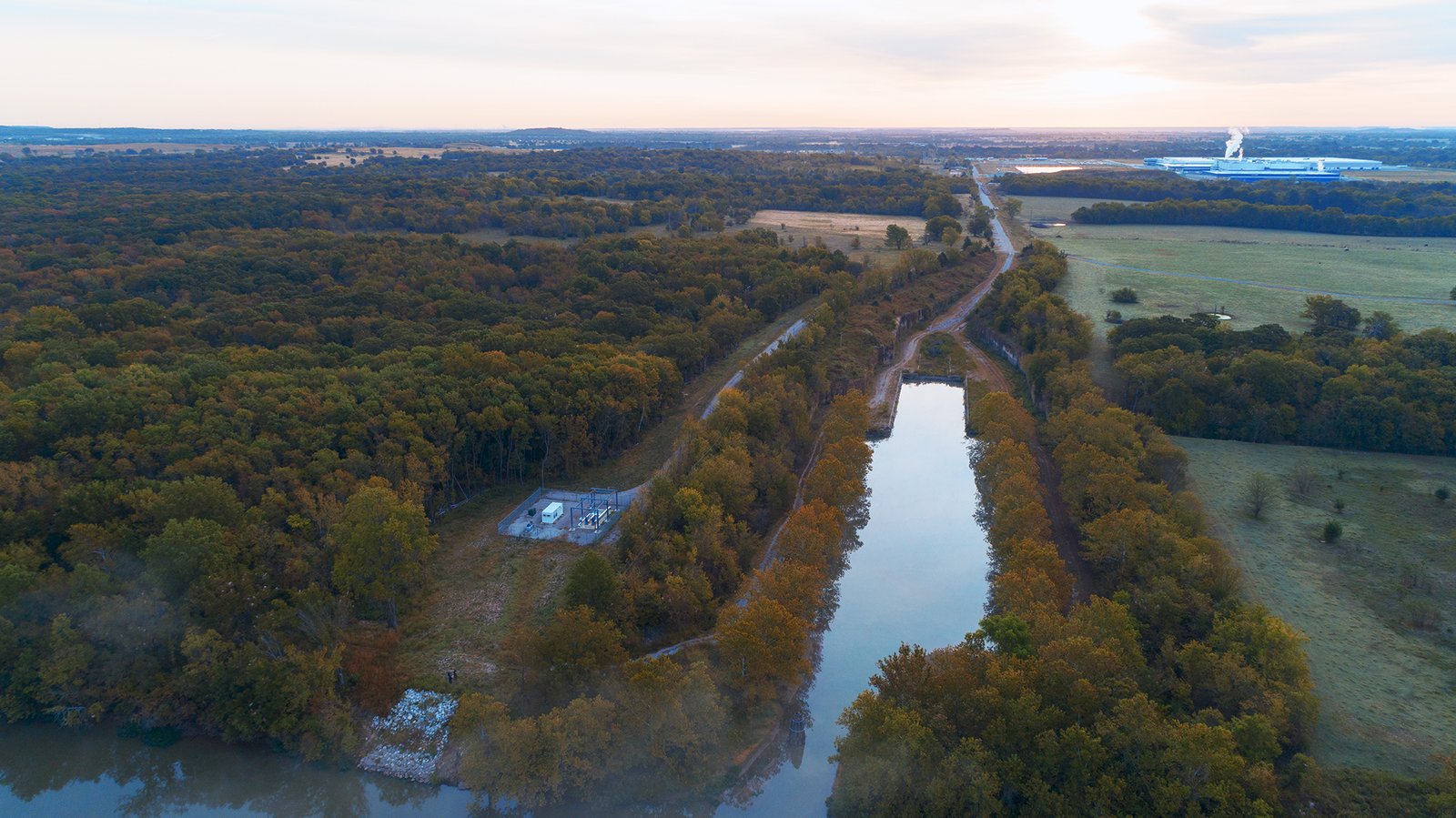
A published description of the port calls it a 2,500-acre industrial park with barge access to the McClellan-Kerr Arkansas River Navigation System and rail access to the Union Pacific main line. It adds that the Verdigris Southern Railroad, connecting the port and a paper plant to Union Pacific, opened in April 2024. For a builder, a park with water, rail and highway access means freight-heavy buildings with truck courts, rail clearances and big electrical services.
We are not the builder of those large plants, and we do not suggest otherwise. We build the buildings that support them and the independent operations that choose the same location for the same reasons.
What is happening at the park
AEP reported in April 2018 that a paper company broke ground on March 16, 2018 on a $360 million, roughly 1.8-million-square-foot integrated paper production plant with 300 jobs, in the AEP-owned Inola River Rail Industrial Park about 15 miles east of Tulsa, with over 1,100 acres still available at the park. A published account says the same company broke ground in June 2026 on a $775 million, 1-million-square-foot expansion.
The same account lists a planned $4 billion aluminum smelter announced in May 2025, with a partner taking a 40 percent stake in January 2026, and a solar plant that was on hold as of May 2025. These are announcements, and plans of that size change. We advise clients to base their own construction decisions on signed leases and confirmed demand, not on headlines.
Why support buildings are different
A supplier building next to a big plant often has a strict delivery relationship with its customer. If a plant needs components within hours, a warehouse must be sized, lit, heated and equipped to handle that flow. We look at the throughput first, then decide dock count, clear height, floor flatness and office size.
Some tenants also face the customer's own construction and safety standards, including site orientation, drug testing and gate access. We prepare the crew, vehicles and badges early so that the first week is not lost to administration.
Labor, trucks and a tight regional market
When several large projects share a labor market, trades become scarce and material deliveries stretch out. Concrete, rebar, electrical gear and heavy equipment are all contested. We commit crews and suppliers early, place orders as soon as drawings allow, and keep a short list of alternates so a single shortfall does not stall your building.
We also plan for traffic. Highway and county road capacity near an industrial park is limited at shift change. Deliveries and worker parking for the site crews are scheduled to avoid those peaks, and we work with the park's management on gate and haul-road arrangements.
Site, concrete and steel
Open land at an industrial park looks simple, but heavy loads and wet weather expose weak subgrades fast. We sequence mass grading, utilities and building pads to keep trucks on stable ground, and we protect completed pads with temporary drainage. Our mass grading work is paired with geotechnical advice so cut-and-fill plans match the soil.
Once the pad is ready, our trade partners place footings and slabs, and set pre-engineered metal buildings or tilt-up panels as needed. A metal building can be erected quickly and expanded later, which suits tenants whose demand is uncertain, while tilt-up suits permanent heavy users who want durability.
Permits, fire protection and the state code
Oklahoma's Uniform Building Code Commission adopted the 2024 International Building Code, as amended, as the statewide commercial minimum, effective September 14, 2026, and the 2024 International Fire Code as the statewide fire minimum on the same date. Industrial buildings that store plastics, paper products, pallets or chemicals are driven by the fire code more than by the building code, since commodity class and storage height set sprinkler density.
We bring the fire protection engineer in during schematic design, ask the authority having jurisdiction for its expectations, and prepare a code summary for the owner and lender. That avoids the late discovery that a planned rack height requires in-rack sprinklers or a larger water supply, which is an expensive surprise on a rural industrial lot.
Warehouses and truck yards
Most of the independent work around a freight park is warehouse, truck court and equipment storage. Our distribution center construction experience covers loading dock layouts, trailer parking, drainage and lighting, which matter more than architecture on a site like this. We also build maintenance shops with floor drains and oil-water separators.
For clients comparing sites, our page on the nearby Tulsa Port of Catoosa explains a different port with its own character, and Claremore offers a site-ready industrial park with highway and rail access.
Budgeting for a busy industrial region
Building costs near large projects move with labor demand, so a fixed price that holds for six months is more valuable than an estimate that floats. We lock subcontractor and supplier quotes when we can, and we show which items remain exposed to the market, such as steel, conduit and switchgear.
We also remind owners to budget for utility extensions and permits, which are often outside the building contract but can control timing. If you work for a logistics and distribution company, we will go through those items with your operations lead.
Plan your Inola-area building
Give us the product, the volume and the date your customer expects you to be ready. We will check the site, suggest a building size and give you a schedule that accounts for the regional market.
Common Questions
Can a smaller company really build near a large plant?
Yes, as long as it meets the customer's safety and quality rules. Many suppliers and service companies build on adjoining land. We prepare for orientation, badging and inspection requirements before mobilizing so that work starts smoothly.
Should I plan around announced projects that have not yet broken ground?
With caution. Announcements show direction, but plans can change or pause. We base schedules on confirmed tenants and signed agreements, and we help you choose a building size that can grow if demand arrives.
What delivery method suits a fast supplier building?
Often design-build, because it shortens the path from program to permit. A single team carries the design and the price, and early site work can start while the building is detailed. We can also work with an owner's architect when a lender or customer requires it.
How do you handle barge, rail and truck access in design?
We ask the user how product moves, then locate doors, aprons and tracks accordingly. Rail needs clearances and approvals; trucks need turning room and queue space. We lay out both before design is far along.
How far is the park from Tulsa for crew and supplier logistics?
One published description places the industrial park about 15 miles east of Tulsa. That is close enough for Tulsa-area suppliers and ready-mix plants to serve it, but far enough that a batch plant breakdown or road closure matters. We confirm supplier haul times in estimating and schedule critical pours with a backup plant.