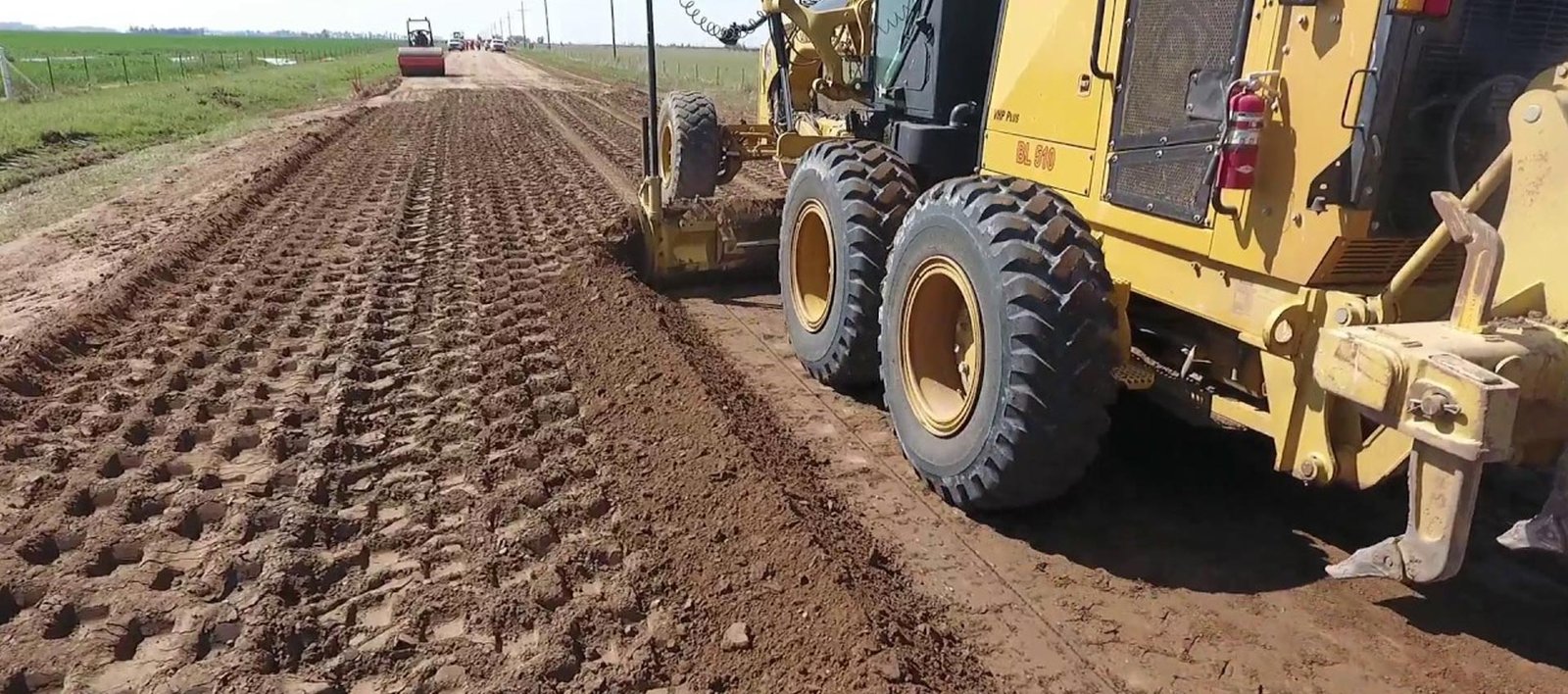
Ninety acres is a lot of dirt to move before anyone sees a building. Arrow Forge, the light industrial district off the Creek Turnpike at Olive, is that size, and the city's master plan for it calls for a spine road of roughly 4,700 feet and a sanitary lift station before individual lots are sold. Grading on a site like that is not a warm-up for the real work. It decides where water goes, which lots can take a large slab, and whether the first tenant is turning over keys in the dry months or sitting in mud.
We take on mass grading as its own scope, not as a line item buried under the building. That means a survey-controlled earthwork model, a haul plan that keeps trucks off neighborhood streets, a compaction testing schedule agreed with the geotechnical engineer, and a clear answer on what happens to wet spoil. Owners across Broken Arrow, Wagoner County and the rest of the metro call us when a pad has to be ready on a date, and when the cut and fill numbers do not balance on paper the way the site plan implied.
The sections below describe how we sequence the work, what shapes the price, and where the local weather and approvals tend to push on the schedule.
What a mass grading package includes
Clearing and stripping come first, with topsoil stockpiled where the landscape plan can use it and the rest hauled or spread. Then comes the cut and fill itself: bringing the site to subgrade elevation in lifts, proofrolling each lift, and testing density before the next one goes down. On a flex or warehouse pad we carry the work through building pad preparation, with lime or cement treatment where the geotechnical report calls for it, and rough grading of the parking and truck areas around it.
The package also includes the temporary works nobody photographs: silt fence, inlet protection, a stabilized construction entrance, and diversion swales that keep runoff off neighbors until the permanent stormwater drainage is in service. We coordinate with the utility contractor so trenches are not cut through a freshly compacted pad. For a fuller picture of how earthwork connects to roads, water and sewer, see our site development and utilities work.
Wet weather, clay and the haul route
Rain is the main scheduling risk on any Oklahoma earthwork job. When the National Weather Service recorded six to fifteen inches in about eight hours during the Memorial Day flood of 1984, it was a reminder that this region can deliver far more water than a grading plan assumes. We do not plan for the worst storm, but we do plan for clay soils that hold water, for lifts that cannot be placed after a heavy rain, and for float days built into the schedule so a wet week does not become a missed delivery date.
Haul routes deserve equal attention. A job along a busy corridor such as the Broken Arrow Expressway or near the Creek Turnpike interchanges needs truck movements planned around school hours and peak traffic. Where fill has to be imported we price the haul distance honestly, and where the site produces excess material we look for a nearby place to put it before we start cutting, so the earthwork does not stall waiting for a disposal answer.
What moves the earthwork price
Three things drive most of the number: the volume that has to leave or arrive, the haul distance, and how much of the subgrade needs treatment before it can carry a building. A balanced site with a short internal haul can be inexpensive per cubic yard. A site that is short on fill, or that has rock, groundwater or unsuitable soils, can double the cost of the same acreage. We ask for the geotechnical report before we price, and we flag allowances where the report leaves questions open.
Developers and logistics and distribution users comparing several parcels, for example the 85-acre Creek 51 Business Park at the corner of the Creek Turnpike and Highway 51 against other light industrial land, can ask us for a rough grading comparison before they buy. Understanding how much earth each parcel needs moved, and how much is already near finished grade, often changes the ranking more than the asking price per acre, especially for a warehouse that needs a large, flat pad.
Sequencing against the building
Mass grading sits at the front of the critical path, so every week saved or lost passes straight through to occupancy. We prefer to grade the building pad and truck court areas first, so foundations and truck court paving can start while the rest of the site is still being shaped. Where an owner is phasing a large site, we leave the later phases in a stable, seeded condition rather than half-worked dirt.
Utility conflicts are the other schedule threat. Arrow Forge, for instance, includes a sanitary force main bored beneath the Creek Turnpike, which means the grading contractor, the boring crew and the road authority are all working to dates that depend on one another. We keep a short weekly look-ahead with everyone touching the site, because most earthwork delays start as a message that did not get passed along.
Dust, mud and neighbors
Large earthwork operations are noisy and visible, and neighbors judge a contractor by what ends up on the road. We run water trucks, sweep the entrance daily, and keep trucks covered. Erosion controls are inspected after every significant rain, and corrections are made before the next one arrives, not after a complaint. Spotters and clear haul-road rules keep pedestrians and other trades away from moving equipment.
Because the city, the school board and the neighbor next door all watch a grading job, we give them a phone number and a plain schedule. People are more patient with trucks when they know the work lasts six weeks and when it ends. Industrial buyers considering Wagoner or the Arrow Forge district often ask what our public-facing site practices look like, and this is what we show them.
Start with the dirt
Send us the survey, the geotechnical report and the target date. We will return a grading approach, a haul plan and a realistic schedule for your site in the Broken Arrow and Tulsa metro area, and we will tell you plainly what we think the ground will do.
Common Questions
Can you grade a site before the building design is finished?
Yes, and it often saves months. We can bring a site to a rough pad elevation and leave a small allowance for final adjustments once the building footprint and finished floor are set. The risk is that the structural design later calls for a different pad elevation or a deeper undercut. We discuss that risk with the owner and the engineer before starting, and we keep the pad lightly graded, not final, until the design catches up.
How do you handle sites that are short on fill?
We look first for a nearby source within a reasonable haul, and we price borrow material as a separate line so the owner sees the trade-off. Sometimes lowering the building pad slightly, or shifting the footprint on the site, removes the shortage without trucking in anything. We run those alternatives against the earthwork model before recommending one.
What happens to topsoil and spoil that the site cannot use?
Topsoil is stockpiled and reused where the landscape plan allows, and the remainder is hauled to an approved disposal or reuse location. We identify that location at bid time, because a disposal site that is far away or restricted can move the price more than the cutting itself.
When can foundations start after grading?
Once density tests pass and the geotechnical engineer accepts the pad, foundation work can begin. We often overlap the two by finishing the building pad first and leaving the rest of the site for later. Rain delays and failed tests are the usual reasons for the gap to grow, so we build testing time into the schedule.
Do I need a permit before moving dirt?
In most cases yes. A grading or land disturbance permit and an erosion control plan are normally required before work begins, and larger sites also fall under state stormwater rules for construction activity. We confirm the requirements with the city or county at the start and include the paperwork in our preconstruction schedule.