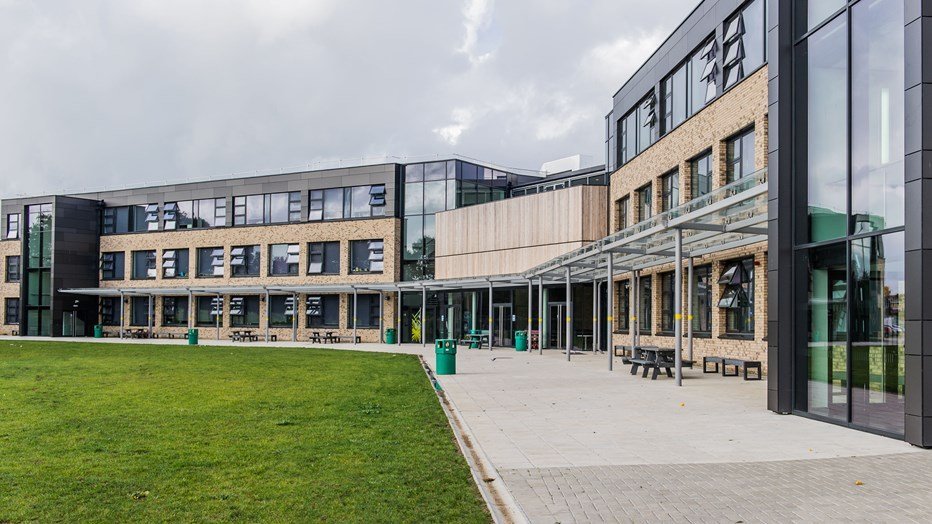
More than 60 classrooms, 12 science labs and 8 computer labs serve over 2,000 students at the Broken Arrow campus of Northeastern State University, and beginning in spring 2026 the campus added freshman and sophomore courses under Senate Bill 701. Across the street from the Arrow Forge district, Tulsa Tech runs CNC machining, mechatronics, welding, diesel and drafting programs on 53 acres. Education in Broken Arrow is growing in two directions at once, toward college-level instruction and toward the skilled trades that the city's manufacturers and aerospace employers need.
We build for school districts, career and technology campuses, colleges, private schools and church-affiliated education ministries. Their projects share a feature that makes them different from most commercial work: the building cannot be late. Classes start in August or January whether or not the contractor is ready, and the people who suffer from a missed date are students, teachers and families.
We approach education work the way a good school administrator would. We plan backward from the first day of class, we keep the neighbors and the board informed and we treat every summer break as a fixed, non-negotiable construction window.
Building to the bell schedule
The most important calendar on an education project is the academic one. For K-12 work, the largest windows are early June through early August and the winter break, and almost every major renovation is planned to fit them. We lay out the scope in phases that can be finished and turned over inside those windows, with furniture, technology and security systems installed and tested before staff return.
For colleges and technical campuses, the schedule is shaped by term starts, enrollment cycles and accreditation visits. The fact that lower-division courses started at the Broken Arrow campus on January 12, 2026 shows how quickly a program can change an institution's space needs. We help administrators see which classroom, lab or student-service spaces need to be ready for which term, and we sequence the work so the most urgent space is first.
What drives cost in a school or campus project
School budgets are often fixed in advance by a bond, a grant or a legislative appropriation, which means the design must fit the money, not the other way around. We bring pricing into the design process early, with cost checks at conceptual, schematic and design development stages, so that value engineering happens while changes are cheap. The difference between a laboratory and a standard classroom, a commons that doubles as a storm shelter, or a gymnasium with a clear span can swing a budget by a surprising amount.
Technical education adds equipment. A welding or mechatronics program needs power, ventilation and floor loading that a classroom does not, and Tulsa Tech's list of programs, from diesel service to collision repair and truck driver training, illustrates how varied those needs are. We coordinate equipment vendors, utility service and slab design early. For campus work that adds a new building to an existing site, our education facility construction approach includes a full utility and site review.
Codes, accessibility and what owners should confirm
The 2024 International Building Code, with Oklahoma amendments, is the statewide commercial minimum effective September 14, 2026, and the 2024 International Fire Code is the fire minimum. Education occupancies add scrutiny to egress, fire alarm, sprinklers, accessible routes and emergency communication, and the state code commission has said other jurisdictions can amend the code only under Oklahoma law. We ask your architect and the building official which edition governs your permit before pricing the work.
Public school and college projects built with public funds must provide facilities for people with disabilities and, where feasible, elevators, under state law, and older buildings may need to comply when an addition increases floor area by 25 percent or more in a year. We keep those triggers in view when planning additions. If your campus is public, you may also find our page on public sector owners helpful.
Campuses and districts around the metro
Broken Arrow is the center of our education work, with the Broken Arrow education campuses at the top of the list, but suburban growth across the metro is creating similar needs. Bixby Public Schools operates nine schools including Bixby High School, and in Sand Springs the public school district is the largest employer in the city, a reminder that school districts are community hubs with large facility portfolios. We are prepared to mobilize to those cities and others.
Districts that serve several communities need a builder who will treat a small-town job with the same seriousness as a large one. We work with superintendents, boards and building committees, and with the neighbors who live next to the campus, so that each project feels part of the community. You can find more about the cities where we work on our Bixby and education campus pages.
Working next to students and staff
The safest way to build on an active campus is to separate construction from students entirely. We use fenced work zones, dedicated construction entrances, delivery windows outside arrival and dismissal, and a site safety officer who walks the perimeter daily. Background checks, visitor sign-in and badge procedures are followed according to district policy, and crews are briefed on conduct around children.
Tornado and severe weather season in this part of Oklahoma means districts often ask for storm shelter space. We understand how those rooms are designed and tested, and we include them in the sequence so they are ready when the building is occupied. Colleges and career campuses with labs and shops add machine safety, ventilation and chemical storage issues, and we coordinate those with your environmental health and safety staff. For related building types, see school and education buildings.
Start with the calendar and the budget
Tell us the opening date, the funding source and the buildings involved. We will return a preliminary schedule, a cost range and a list of decisions the board or committee needs to make first. If your campus includes a clinic or training program for healthcare careers, our page on healthcare systems may also be useful.
Common Questions
Can you finish a school renovation in one summer?
Often, if the scope is planned for it. Early procurement of doors, hardware, electrical gear and finish materials is critical, and we usually begin ordering in winter. Projects that need more than one summer are divided into phases that each leave classrooms ready for students.
How do you handle a project funded by a bond?
We prepare budgets and schedules that match the bond language and give the district what it needs for public reporting. We also keep a clear record of change orders and contingency use, since board members and the public may ask questions.
Do you build for career and technical education programs?
Yes. Shops and labs need power, ventilation, dust and fume collection, slab loading and sometimes overhead cranes. We work with program directors, equipment vendors and your architect to get those details right.
What if our campus stays open during construction?
We plan separate access, noise limits, temporary protection and daily cleanup. For an occupied building, we define zones, communicate changes to staff in writing and make sure fire exits and accessible routes stay clear.
How early should we bring in a contractor?
As early as the concept stage. A preconstruction partner can test the program against the budget, identify long-lead items and schedule the work around the academic calendar before design decisions are locked.