Building in Tulsa means planning around water and traffic before anyone sets a footing. The Arkansas River splits the city, creeks run through neighborhoods that were farmland when the first storm sewers went in, and the interstate and US highway interchanges that feed the core are under construction. We are a Broken Arrow general contractor, and we take Tulsa work for developers, owners and property managers who want a builder that reads the drainage map and the detour map in the same meeting.
That reading shapes the first weeks of every Tulsa job we price. We check where the lot sits against the floodplain and the levee system, ask how trucks will actually reach the site while ramps are closed, and find out which plan review path the city will put your permit on.
What follows is how we approach office, mixed-use, retail, healthcare and light industrial work inside the city limits, what Tulsa's recent history teaches about site design, and where the schedule risks tend to hide. If you are comparing Tulsa with a suburban parcel nearby, our Broken Arrow page covers the east side of the same metro.
Commercial work inside the city limits
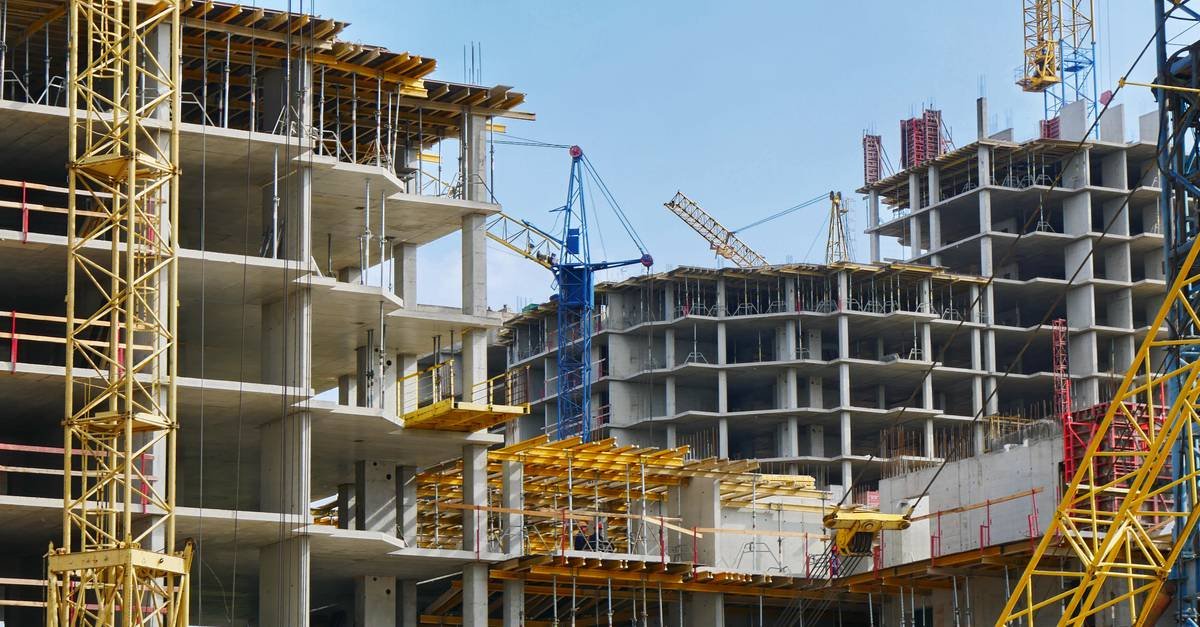
Most of what we build in Tulsa falls into a few families. Office and tenant interior work is the steady one: demolition of dated space, new demising walls, mechanical and electrical upgrades, and a finish package that fits the lease. Ground-up buildings come next, usually mid-rise offices, multifamily over retail, medical clinics and restaurants on pads that have been cleared of older structures. Our general commercial construction service covers the whole set, and we put one project manager on each job from the first estimate through closeout.
Infill is its own discipline. Neighboring buildings sit close to the lot line, utilities were laid for whatever stood there before, and underground surprises such as old foundations, abandoned tanks and unmarked lines turn up often enough that we carry a plan for them. We pothole early, review the as-builts with the city, and ask the owner to hold a contingency for unforeseen subsurface conditions.
What the 1984 flood and the levee reports teach
The National Weather Service describes the Memorial Day flood of May 26 to 27, 1984 as 6 to 15 inches of rain in about eight hours, with Mingo Creek alone accounting for $125 million of the $180 million in damage and more than 5,500 buildings damaged or destroyed. Anyone designing a Tulsa building should read that as a statement about creek drainage, not as history. We look at where a site drains, what the detention requirement is, and whether the finished floor elevation leaves a margin above the nearby channel.
The river carries its own risk. The Oklahoma House reported in May 2024 that the Army Corps of Engineers places the Tulsa County Arkansas River levee system in the top 5 percent most at risk for failure, protecting about 10,000 people and more than $2 billion in assets, with $137.4 million in federal matching funds available for repairs. For a building owner, that means looking at the flood maps with a skeptical eye, asking the insurer what it assumes, and considering raised slabs, flood-tolerant first-floor finishes and elevated electrical gear when a site lies in the zone. The trade partners for stormwater and drainage build detention and conveyance for exactly this kind of lot.
Haul routes while the interchanges are rebuilt
The Oklahoma Department of Transportation's early November 2026 advisory lists an I-44 and US-75 interchange project in Tulsa continuing through summer 2028. I-44 ramps to northbound US-75 are closed with a detour via eastbound I-244, 51st and 61st Streets carry closures, and the eastbound I-44 off-ramp to Skelly Drive near Lawton Avenue is closing permanently.
We write delivery routes into the logistics plan before mobilizing. Ready-mix trucks have a limited window between batching and placement, steel and precast arrive on oversize loads that cannot take every detour, and crews drive in from several directions. For a job near the affected ramps we schedule major pours early in the morning, stage material on the site instead of the street, and share the routing with subcontractors so a driver is not improvising on the day.
Which code, and who reviews it
Tulsa's plan review page lists the 2018 International Codes and the 2020 National Electrical Code, with the city's amendments, for commercial permits. It also says the city's updates to the 2024 International Codes and the 2023 NEC are in progress with a pending adoption date of January 1, 2027, and that the Oklahoma Uniform Building Code Commission has adopted the 2024 International Codes statewide. For anyone submitting plans near that date, the question of which edition governs is real money.
We call Development Services before design is frozen and ask which edition the submittal will be reviewed under, then write the answer on the first page of the estimate so every trade bids the same rules. If the transition falls in the middle of a project, we keep a record of the permit date, the code path the reviewer confirmed, and any changes the owner approved. Our permitting and entitlements team handles those conversations with the city so the design team does not have to guess.
Who is building in Tulsa right now
The Tulsa Regional Chamber reported in April 2026 that a $1 billion, 2-million-square-foot data center was announced for the 2,000-acre Fair Oaks industrial innovation park in east Tulsa, with more than 1,000 construction jobs at peak and more than $25 million in local road and water improvements. A project of that size pulls skilled labor and concrete capacity toward east Tulsa for years, and smaller owners across the city feel it in bid pricing and trade availability.
We advise commercial real estate developers to lock in subcontractor commitments early, buy long-lead gear as soon as the design allows, and pick a delivery method that gives them a guaranteed maximum price before the market tightens. For work that needs coordination with an airport tenant, see our Tulsa International Airport and aerospace page.
Where Tulsa budgets move
Four items move Tulsa budgets more than the others. The first is site condition, meaning old foundations, fill and drainage upgrades on infill lots. The second is utility capacity, since a change of use from warehouse to restaurant or clinic can trigger water and fire-line upgrades the old building never needed. The third is access during construction, with traffic control, off-hours work and street permits adding real cost in tight corridors. The fourth is trade pricing when large projects draw crews away.
We show those items separately in the estimate instead of burying them in general conditions, so an owner can see which line is a choice and which is a fact of the site. When a lot is a candidate for purchase, we will run a rough site-work range before closing. A parcel a few miles away in Jenks or Sapulpa may carry less infill risk, and that comparison belongs in the land decision, not after it.
Send us the Tulsa parcel and the use
Tell us the address, the use you have in mind and the date you need to open. We will check the flood and access conditions, ask the city which code path applies, and come back with a plain budget range and a delivery plan before you commit.
Common Questions
Does my Tulsa site need flood design even if it is outside the mapped floodplain?
Often yes, in the sense that drainage still matters. The 1984 flood damaged thousands of buildings along creeks that many owners assumed were minor. We review the site against local creek channels and detention rules, and we recommend a conversation with your insurer about what it assumes. Raising the finished floor a modest amount is usually inexpensive during design and very expensive afterward.
Which building code will Tulsa review my permit under?
Tulsa currently lists the 2018 International Codes and the 2020 NEC for commercial permits, with its own amendments, and has a pending adoption date of January 1, 2027 for updates. The state has adopted the 2024 editions statewide. Because the transition is in motion, we ask Development Services directly and put the answer in writing before pricing.
How do the I-44 and US-75 ramp closures affect a construction schedule?
They affect truck routing and crew arrival more than the work itself. Closures through summer 2028 mean detours via I-244 and changes on 51st and 61st Streets. We plan pours and oversize deliveries around them, stage material on site, and send routes to subcontractors before mobilization.
Can you build a tenant interior in an occupied Tulsa building?
Yes. We coordinate freight elevator hours, protect common corridors, keep noisy work to agreed windows and give the property manager a weekly look ahead. Utility shutdowns are scheduled with the building engineer days in advance, so neighboring tenants are not surprised.
Is it better to build in the city or in a nearby suburb?
It depends on the use. Tulsa offers density, workforce and customers, while suburban parcels often cost less to prepare. We price both when asked, including the site work, so the comparison is a real one.