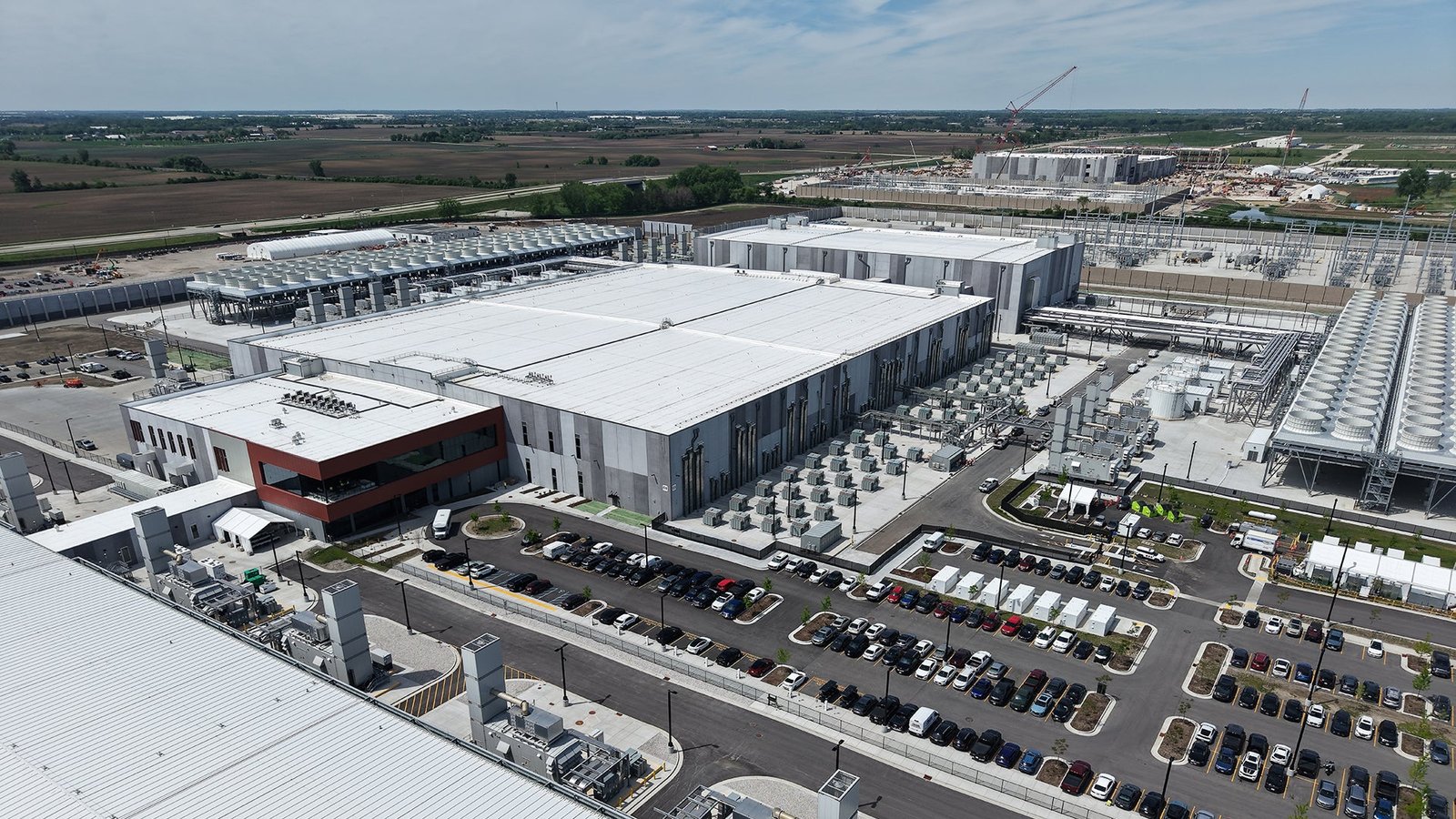
Three very different data center stories played out around Tulsa in 2026, and together they explain what an owner should ask of a builder here. A $1 billion, 2-million-square-foot facility was announced for east Tulsa. A Google campus in Sand Springs won city council approval in February and was later reported to be possibly stalled by a title discrepancy. A developer in Coweta withdrew a proposed hyperscale plan on 270 acres without giving a reason. Demand is real, but the path from announcement to ribbon-cutting runs through land, power and neighbors.
We build the parts of that path a general contractor controls: site work, the structural shell, the support buildings, the coordination of the electrical and mechanical packages, and the commissioning of the finished facility. We do not promise megawatts or fiber, because those come from utilities and carriers. What we do is make sure that when power and the equipment arrive, the building is ready to receive them.
The people around a campus are part of the team. Rural water districts, county road crews, school districts and nearby landowners all have a say in how smoothly a large project proceeds, and we plan community contact early.
What the metro is signaling
The Tulsa Regional Chamber reported on April 22, 2026 that Meta announced a $1 billion, 2-million-square-foot data center at the 2,000-acre Fair Oaks industrial innovation park in east Tulsa, with more than 1,000 construction jobs at peak, about 100 permanent jobs and more than $25 million in local road and water improvements. Operations are expected to begin in 2028. A project of that scale needs a general contractor and trade partners who can manage thousands of daily vehicle trips and a very large workforce on a constrained road network.
Elsewhere, News On 6 reported on August 19, 2026 that Google and Beale Infrastructure announced a 506-acre campus near Cherokee Industrial Park in Owasso, with Public Service Company of Oklahoma supplying power, an on-site substation funded by the developer and 1.5 miles of new water lines for a rural water district. Our takeaway for owners: the utilities and offsite improvements that surround the building often exceed the building itself in schedule risk.
Permits, codes and approvals that gate a campus
A data center shell houses few people, but it still carries serious life-safety and fire protection requirements. The Oklahoma Uniform Building Code Commission adopted the 2024 International Building Code and 2024 International Fire Code as the statewide minimums, effective September 14, 2026, and the 2023 National Electrical Code took effect in September 2024. Jurisdictions may differ: the City of Tulsa lists the 2018 International codes and 2020 NEC for commercial permits, with an update pending January 1, 2027. We confirm which editions apply to your parcel before design is locked.
Beyond code, a campus needs zoning confirmation, platting, stormwater and floodplain review, utility interconnection agreements and sometimes county or district approvals for water. The Sand Springs experience shows how a project with a council vote can still stall on a title question, so we recommend title and survey diligence before major design spending. We help owners build a permit calendar that shows which approvals gate earthwork, which gate vertical construction and which gate energization.
Decisions that shape a campus
Owners tend to settle the same questions in the same order: how much power, what cooling approach, how many phases, what security perimeter and which tenant or user is the first occupant. Each answer changes the building. A liquid-cooled hall asks for different floor loading, piping and leak detection than an air-cooled one. A phased campus needs future-ready underground duct banks and a master plan for generator yards and substation space.
Site conditions matter. Large pads need careful grading, drainage and detention, and rural sites often require roads, culverts and utility crossings. Our site development and utilities group handles earthwork and underground services, and the trade partners for structural steel erection and tilt-wall build the shell with the same schedule logic.
Long-lead gear sets the calendar
On a data center the field schedule follows the equipment schedule. Generators, switchgear, transformers, uninterruptible power equipment and chillers can take longer to deliver than the shell takes to build, so we advise owners to place orders as early as engineering allows, and we track each item with a delivery date, a receiving plan and a storage plan. Equipment arriving before the building is dry creates warranty headaches; equipment arriving after it creates idle crews.
We also plan construction traffic carefully. Concrete pours for large slabs, heavy equipment deliveries and thousands of workers can overwhelm county roads, so we agree on haul routes, flaggers and parking early. The Oklahoma Department of Transportation and local road departments are often more flexible when they see a plan in advance.
Building with the grid in mind
Our approach centers on sequence. First comes enabling work: access, laydown, grading and erosion control. Next the building pad, underground duct banks, foundations and slab. Then the shell, roof and exterior, followed by the mechanical and electrical rough-in and the long process of testing. We schedule so that permanent power can be energized as soon as the utility and the equipment are ready, because temporary power is expensive and finish work waits for it.
Throughout, we keep documentation tidy: commissioning plans, test scripts, as-built drawings and equipment records are assembled as the work progresses rather than in a rush at the end. Owners sometimes ask whether we can carry design as well as construction; a design-build delivery works well on campuses where speed matters and the owner wants a single point of accountability.
Start with the site and the power
Tell us the parcel, the megawatt target and the date you need equipment live, and we will outline what the building, site and approvals will take.
Common Questions
Do you build the electrical and cooling systems yourselves?
We manage and coordinate those packages with licensed electrical and mechanical contractors, since Oklahoma requires trade licenses for that work. Our role is to sequence them, protect the schedule, and make sure the shell, pads and rough-ins meet their requirements. We also lead commissioning coordination.
How should we think about the risk of a project stalling?
Look at land title, power availability, water and local approvals before you spend heavily on design. Sand Springs' Project Spring, for example, was reported in September 2026 as possibly stalled by a title discrepancy even after council approval. We recommend a short diligence phase and a phased budget that releases funds as each gate clears.
What does a data center shell cost compared with a warehouse?
The shell itself is not far from a warehouse, but the electrical gear, cooling, security, fire protection and commissioning make the total much higher. Most of the cost sits in equipment and trades, which is why early pricing and long-lead procurement matter. We can build a cost model during preconstruction estimating.
Can existing buildings be converted?
Sometimes. A large, high-bay building with strong floors, reliable power and room for generators can be a good candidate, though roof loads, column spacing and cooling paths need study. We assess these using a structural review and a utility capacity check before recommending a conversion over new construction.
Who are your typical clients for this work?
Developers, utility-adjacent infrastructure firms and technology operators. Many come through logistics and distribution owners or manufacturers seeking a mission-critical building on land they already control.