The most expensive surprise on many commercial projects is buried. A waterline that is not where the survey shows, a storm sewer that must cross a creek, or a sanitary lift station that must be built before a single lot can be served can add months to a schedule. Site development and utilities is the work that makes a parcel ready for a building: clearing, stripping, mass grading, erosion control, storm drainage, detention, water and sanitary extensions, dry utilities, curbs and paving.
We build that work for developers, owners and public agencies in Broken Arrow and the Tulsa metro. It is often the first phase of a larger project, and the way it is done affects the rest. A building pad delivered flat, compacted and drained saves the foundation contractor time. A storm system that works in a heavy rain saves the owner a lawsuit.
Because site work touches so many people, from the utility to the neighbor, we spend a lot of time on communication. Our first meeting usually includes the owner, the civil engineer and, when possible, a representative of the city or utility who will inspect the work.
What the scope includes
A complete site package normally starts with survey control and a pre-construction meeting. Clearing and demolition come next, followed by erosion and sediment controls, topsoil stripping and stockpiling, mass grading and compaction testing. Underground work includes storm sewer, inlets, culverts and detention structures, sanitary sewer lines, manholes and lift stations, water mains, hydrants and services, and conduits for electric, gas and communications.
Above ground, we build curbs, driveways, parking, truck courts and sidewalks, with the paving sections and concrete thicknesses specified by the engineer for the expected loads. For industrial sites, truck aprons often receive heavier concrete. The same crews can handle warehouse pads and prepare sites for tilt-wall buildings.
Water on the ground
Tulsa-area projects have a long memory of floods. The National Weather Service reports that the Memorial Day flood of May 26 and 27, 1984 killed 14 people and injured 288 in Tulsa, with $180 million in damage, and that Mingo Creek alone accounted for $125 million. The same event flooded 56 homes in Catoosa when Bird Creek rose. A published history of Jenks describes floods from the Arkansas River and Polecat Creek from 1904 through the 1950s and a levee built around the town in 1948.
For a site contractor, that history is not trivia. It means floodplain maps matter, detention must be sized and built correctly, outfalls must discharge where the engineer expects, and construction sequencing must keep rain from turning a cleared site into a mud flow. We review the flood status of each parcel, talk to city floodplain staff and build erosion controls before grading starts. In Catoosa and Jenks in particular, drainage is the first conversation.
Permits and who owns what
Site work involves multiple approvals. A grading permit, stormwater permits for construction, utility extension agreements, platting and, for work in public right-of-way, permits from the city or the Oklahoma Department of Transportation are all common. Public utilities set their own standards for pipe materials, depth, bedding and testing, and an inspector from the utility or city must usually witness key steps.
The Oklahoma Construction Industries Board notes that plumbing and electrical trades are licensed, so we coordinate licensed contractors for those parts of the work. In Broken Arrow, a City of Broken Arrow council recap shows how multi-agency a street project can be: a $3 million federal grant for widening 23rd Street to five lanes with a new bridge, enclosed storm sewer and relocation of the RWD4 waterline, with the Oklahoma Department of Transportation conducting the bidding. We plan for that sort of coordination on private projects as well.
Work we keep close
Earthwork, concrete flatwork and utility installation are the foundation of site development, and we manage them with experienced foremen who know how to read a plan and a field condition. Controlling grading and compaction closely lets us coordinate with the geotechnical engineer, stay on top of testing and adjust when wet weather requires lime treatment or undercutting.
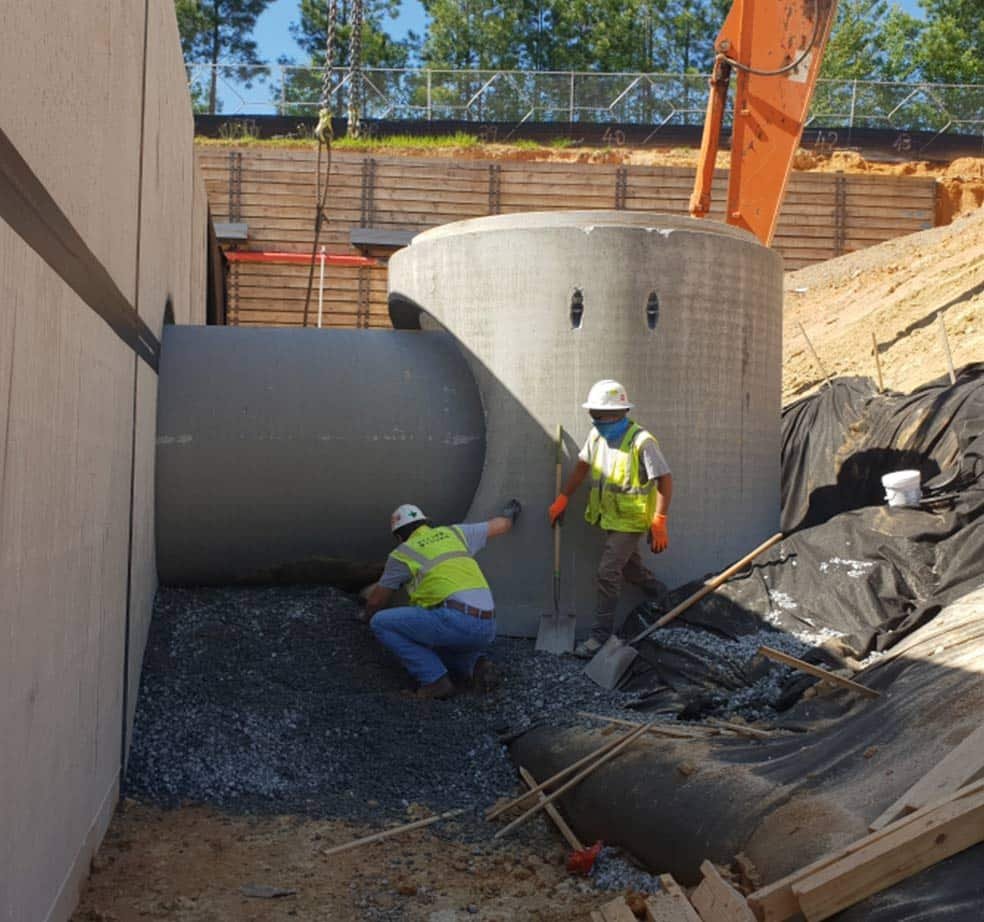
Underground utility installation benefits from consistent crews. Pipe bedding, trench backfill, bulkheads, thrust restraint and pressure testing need care. We keep installation records, take photos before backfill and document tests to give owners a clean closeout. Our related page on stormwater and drainage covers detention and outfall design in more depth.
Cost drivers and sources of change
Site budgets are driven by quantity of earthwork, soil quality, groundwater, rock if encountered, pipe sizes and depths, off-site extensions and the amount of paving. Soft soils that require undercutting or stabilization can overwhelm an estimate if geotechnical borings are thin. We recommend enough borings and a clear unit price for unsuitable soils so the owner knows the price of surprises.
Public infrastructure around a site can be large. The Broken Arrow Economic Development Corporation lists Creek 51 Business Park as 85 acres served by Public Service Company of Oklahoma electric, Oklahoma Natural Gas and City of Broken Arrow water and wastewater, which is exactly the kind of site where a developer's cost per lot depends on how much infrastructure already stands at the property line. We help owners compare such sites and plan whether to bear the cost or ask for city participation.
Weather, inspections and utility windows
Weather is the biggest scheduling variable in earthwork. A wet spring can lose weeks, and we plan critical grading for drier seasons where we can. Utility shutdowns require coordination with the owner of the system, sometimes days in advance. Inspections by the city or utility must be scheduled so that trenches are not left open or pipe is not buried before it is approved.
We also sequence site work to protect the building schedule. Pads for the first building are prepared first, utilities are extended to that building before others, and access roads are built to a standard that supports concrete trucks and cranes. For owners working with developers and commercial real estate teams, a phased site plan can keep early buildings moving while later phases wait for tenants.
Get the ground ready
Send us the survey, the civil plans or just the parcel, and we will tell you what the site work should cost and how long it should take.
Common Questions
What should I check before buying a parcel?
Zoning, floodplain status, utility availability and capacity, soil conditions, access, easements and any planned road projects. We can help review these and build a rough site budget before you close, so your offer reflects reality.
Who pays for off-site utility extensions?
It depends on the city, the utility and the project. Some extensions are borne by the developer, others are shared or reimbursed, and some are supported by tax increment finance districts. For example, Broken Arrow used a TIF district for Creek 51 Business Park. We work with owners and city staff to understand the cost split.
How do you manage stormwater during construction?
We install silt fence, inlet protection, stabilized construction entrances and sediment basins before grading, inspect them after rain and repair them promptly. Required plans and inspections vary by site size.
Can utilities be built in phases?
Yes. Many developments extend main lines and build detention for the full site, then complete lots as tenants arrive. Phasing saves capital but requires careful planning of access, temporary drainage and tie-ins.
Do you handle site work for public and private owners?
Yes, including manufacturers preparing plant sites and government agencies building infrastructure.