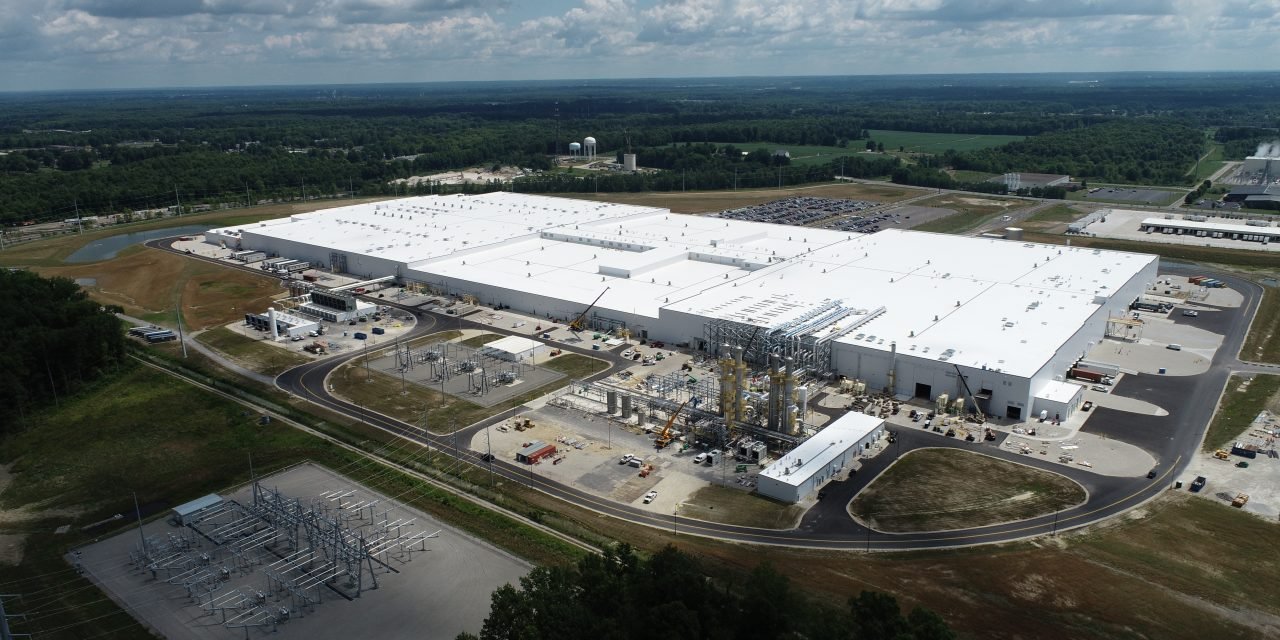
Vehicle plants are really three buildings under one roof line: a heavy-power process hall, a logistics wing that feeds it, and a training and office block that keeps the workforce current. Whether the product is an electric vehicle, a battery pack, a drivetrain module or a body-in-white cell, the owner is buying all three at once, and the order they get built in decides when the first unit rolls off a line. We plan automotive and EV work in the Tulsa metro with that sequence in mind from the first site walk.
Broken Arrow gives a plant owner a few things that are hard to find together. The city's economic development corporation keeps a directory of companies with 50 or more employees that includes a deep bench of manufacturers, and Tulsa Tech's campus on West Florence Street teaches CNC machining, mechatronics, welding, diesel service and collision repair on 53 acres. Those programs are the labor pipeline for a plant that needs maintenance technicians and line operators long before it needs executives.
The land is the other half of the answer. Arrow Forge and Creek 51 Business Park both sit beside the Creek Turnpike, and the Port of Catoosa is a short haul away for inbound steel, resin and outbound units. If you are weighing a Broken Arrow site against another metro, the useful question is not whether the building can be built, but how fast power, rail access and a permit review can be lined up behind the foundation work.
Why the Broken Arrow area suits supplier-tier and assembly work
An automotive supply chain wants tight delivery windows, a skilled maintenance workforce and room to add a second line. The city's directory of larger employers lists manufacturers across several product families, and the same directory names aerospace firms such as FlightSafety International and L3Harris, which tells you the local labor pool already works to documented quality systems.
Scale is the next question. A paper production plant in the Inola river rail park broke ground at roughly 1.8 million square feet on a $360 million budget, which shows the metro can host a plant measured in millions of square feet on a rail-served site. Most supplier plants are far smaller, so we show you where line two or a paint booth bank would go before the first slab is poured.
The structure: slab, bays and the cranes you will want later
Automotive floors take abuse that office-style slabs never see: robot bases, press foundations, tow-motor traffic and heavy fixtures that move when a model changes. We detail the slab with thickened sections under fixed equipment and leave pits and trenches for conveyors and fluid lines, rather than saw-cutting a new floor in year three. Our commercial concrete floor work starts with the flatness requirement of the equipment vendor, because a laser-guided cart and a stamping line do not tolerate the same tolerances.
Above the slab, process halls usually want wide clear spans, 30 feet or more under the hook where overhead cranes or high conveyors run, and roof structure sized for rooftop make-up air and process exhaust. Depending on the layout we use pre-engineered metal framing for the shell, tilt-wall panels where the owner wants a masonry-like fire rating and a long-term envelope, or a hybrid with a steel frame in the process hall and tilt panels at the dock wall. Each has a different effect on the schedule, and we price all three honestly during preconstruction.
Code, fire protection and the permit path
The statewide minimum for commercial building is the 2024 International Building Code as amended by Oklahoma, effective September 14, 2026, with the 2024 International Fire Code adopted at the same time and the 2023 National Electrical Code already in force. A paint finish area, a battery charging room or a parts washer each triggers its own fire and life-safety provisions, so we map hazardous-occupancy questions with the design team and the fire marshal before the drawings are final. Because cities may amend the state minimum only under state rules, we confirm the edition and any local amendments Broken Arrow enforces with the city at the start of every project.
Oklahoma does not require a state general contractor license, but electrical, mechanical and plumbing trades are licensed, and the plant will need all three in volume. We coordinate the trade permits and the sprinkler design together, since the storage commodity class and rack heights set the water supply you will need from the city main, and a fire pump may follow. Getting that answer early keeps a utility surprise from landing in month six.
Power, gas, water and wastewater
A vehicle or battery plant is a power project first and a building project second. Creek 51 Business Park is described by the city's development office as served by Public Service Company of Oklahoma electric, Oklahoma Natural Gas and City of Broken Arrow water and wastewater, and Arrow Forge is being opened with a roadway, waterline and a sanitary lift station whose force main is bored beneath the Creek Turnpike. Those details are the start of the conversation, not the end of it. We ask the utilities for capacity letters in writing before any land commitment is final.
Process wastewater, compressed air and high-voltage service all lengthen the long-lead list, and switchgear, transformers and chillers can take longer to deliver than the structure takes to erect. Our approach to long-lead procurement is to release equipment orders during design, not after permit, and to schedule the foundation pours around the delivery dates of the heaviest pieces. That is also where site development and utility scope gets coordinated with the electric provider, so an energization date does not slip behind the finish work.
What moves the budget on a plant of this type
Three items usually decide the number: the electrical gear, the process-specific slab and pit work, and the fire protection. Shell cost per square foot is the part owners compare first, yet it tends to be the smaller share of an automotive project. Equipment foundations, trench drains, clean-room-style partitions in battery areas and heavy mechanical systems are where an estimate grows or shrinks. We carry allowances openly and replace them with quotes as the equipment package firms up.
Incentive timing also touches cost. Public infrastructure on a district like Arrow Forge, a ninety-acre site with a 4,700-foot spine road and 6,720 linear feet of waterline, can shorten the private site work, and a tax increment district such as the one created for Creek 51 can shift who pays for the first roads and lines. Neither removes the owner's duty to pay for what happens inside the property line, so we separate public and private scope on day one in our preconstruction estimate.
From site selection to start of production
A realistic plant schedule has four overlapping tracks: land and approvals, design, equipment procurement, and construction. Equipment installation, commissioning and training the workforce in new tooling usually take longer than the shell itself. We build the schedule backward from the production date and show where each long-lead item has to be ordered.
Weather matters on red clay. Red clay swells and softens after heavy rain, so mass grading is timed outside the wettest spring weeks where the schedule allows, and the pad is proof-rolled before steel arrives. If a slab has to be placed over the winter, we plan ready-mix hot water, blankets and curing protection. See how we handle mass grading and earthwork on large pads, and talk with us about phasing a second line so production in building one is not disturbed by construction in building two.
Weighing a plant site in the Tulsa metro?
Tell us the product, the first-phase footprint and your target production date, and we will walk the sites, check power and permit questions, and give you a straight schedule. We work regularly with owners in the manufacturing sector, and a site visit is the best next step.
Common Questions
Is there an EV or automotive plant already in the Broken Arrow area we should compare against?
We do not rely on any assembly plant here as a comparison and would not guess at one. What the area does offer is a documented base of manufacturers, aerospace suppliers working to quality systems, and a technical campus that teaches machining and mechatronics. For a supplier plant that is a workable starting point, and we can walk you through the specifics of an actual site once you have one in mind.
How much land should a first phase plan for?
Plan the building, then add truck circulation, parking, stormwater detention and the expansion pad, which together often take more ground than owners expect. Arrow Forge is 90 acres and Creek 51 is 85, so a mid-sized plant fits with room to grow once lot lines and setbacks are confirmed with the city.
Which building code will govern the plant?
The statewide minimum is the 2024 International Building Code as amended by the state, effective September 14, 2026. The City of Tulsa still lists the 2018 codes for commercial permits until its own update, so the edition depends on which jurisdiction the parcel is in. For Broken Arrow, we confirm the adopted edition directly with the city at kickoff.
Can a vehicle plant be built in phases while production starts?
Yes, and it is often the right call. We separate the first production hall from the expansion area with temporary walls and a distinct construction entrance, run noise and dust controls, and phase utility tie-ins so a shutdown never catches the line unprepared. The tradeoff is a modest premium for the temporary work, which we price openly.