Switchgear ordered after the permit is issued is switchgear that arrives after the building is ready for it. That sentence describes the most common schedule failure on commercial work, and it is rarely the fault of any one party. Electrical gear, transformers, rooftop units, elevators, overhead doors, structural steel and specialty process equipment can all take months to build and ship, and the manufacturers do not start until the owner or contractor commits to a purchase order and an approved submittal.
Long-lead procurement is the discipline of identifying those items early, getting them designed, approved and ordered ahead of the rest of the job, and tracking them until they are on the dock. We do it for owners and developers across Broken Arrow and the Tulsa metro on industrial buildings, healthcare projects, schools and retail, and we treat it as a preconstruction service with its own schedule and its own risks.
This page explains how we do it and what owners need to decide.
Working the schedule backward from the equipment
The method starts at the end. If the building has to be energized on a particular date, we work backward from that date through startup, testing, installation, delivery, shipment, manufacturing and submittal approval. Each step has a duration, and the total gives a latest-order date. Anything that falls before today is a problem we raise immediately, with alternatives, not a surprise at week twelve of construction.
We keep a procurement log that lists each long-lead item, its supplier, the submittal status, the order date, the quoted lead time, the promised ship date and the needed-on-site date. We update it weekly and review it with the owner. When a supplier pushes a date, we can see the downstream effect at once and decide whether to expedite, substitute, change the sequence or accept the delay.
Why the Tulsa area feels it
Utility-scale and industrial projects are competing for the same equipment. Tulsa's aerospace sector shows the scale: Lufthansa Technik announced an expansion of its Tulsa engine facility from 28 to 46 work bays with a dedicated module shop, and a $65 million composite materials facility is planned on 18 acres in the North Development Area at the airport with completion anticipated in 2028. Both involve specialized building systems and process equipment, and both draw on the same electrical and mechanical suppliers as everyone else. See our work around Tulsa International Airport and the aerospace area.
Power is the other pressure. A data center campus announced for unincorporated Tulsa County near Cherokee Industrial Park includes an on-site substation funded by its developer, and a data center approved by the city council in Sand Springs in early 2026, since reported stalled by a title dispute, calls for the project owner to fund its own substation and transmission lines. Projects of that scale can compete for the transformer and switchgear production that smaller commercial buildings also need. Even if your project is modest, it competes in the same market.
Early release packages
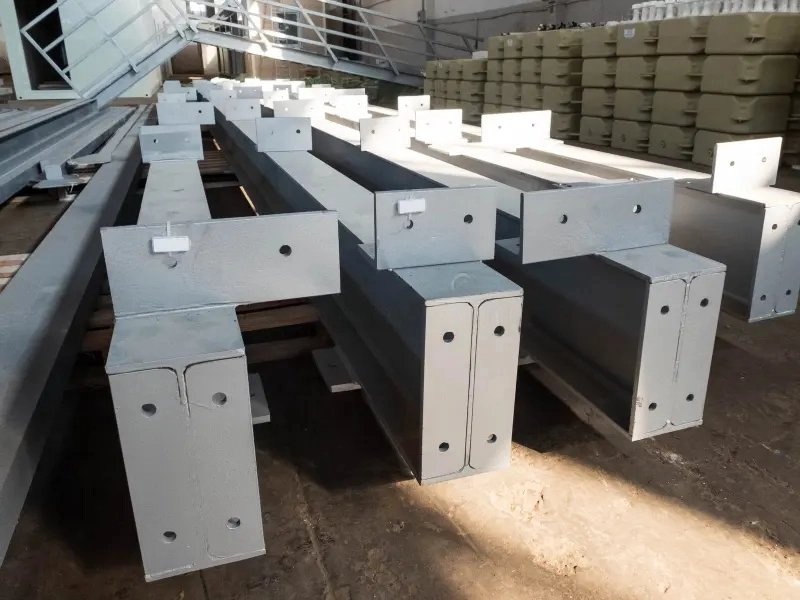
Where the design is not final, we propose early release packages. That means issuing a limited set of specifications for a single item, getting bids or a negotiated price, and reaching a purchase order before the full construction documents are complete. Structural steel is a common example, as are electrical switchgear and large mechanical equipment. It requires the design team to freeze the main loads and dimensions early, which can be uncomfortable, and we work with architects and engineers to make that tolerable.
Delivery methods that suit the approach include design-build delivery and construction manager at risk, because both allow the contractor to be involved while the design is still moving. Under a traditional bid, owners can still purchase equipment directly and assign it to the contractor, though risk and warranty need to be written clearly.
Price risk, deposits and storage
Equipment prices change. A quote may be valid for thirty days or less, and a deposit may be required to hold a production slot. We help owners decide whether to commit funds early, how to protect the deposit with a bond or letter, and what happens if the project is cancelled. We also price the cost of storage, because gear that arrives before it can be installed has to be kept somewhere, insured and protected from weather.
Escalation clauses are part of the discussion. Some suppliers will fix a price at order; others will adjust at shipment. We bring those terms into the budget, and we compare the cost of an early order against the cost of waiting. For a plant expansion with a hard production start, such as those a manufacturing client might plan, the carrying cost of early purchase is typically small compared with the cost of a delayed start.
Submittals, approvals and code review
Long-lead items typically require engineer review, and some require approval by the authority having jurisdiction before they can be installed. Fire alarm panels, sprinkler components, elevators and certain electrical equipment are examples. As the statewide minimum commercial code is the 2024 edition as of September 14, 2026, we check that equipment listings and the design basis match the edition the local building official will enforce.
A rejected submittal costs weeks. We review submittals ourselves before sending them to the engineer, checking the model number, rating, finish, dimensions and accessories against the specification. The few hours that takes can avoid a resubmittal cycle that would otherwise delay release to the factory. For buildings with heavy power loads such as a data center, this is the item that decides the opening date.
Order early, build on time
Send your equipment list and your target opening date. We will return a procurement schedule that shows the latest safe order dates and any item already at risk.
Common Questions
Which items usually count as long lead?
Switchgear, transformers, generators, large air handlers and rooftop units, elevators, structural steel, specialty doors, curtain wall, process equipment and some lighting packages. Lead times change with the market, so we confirm with suppliers at the time of the project.
Can I order equipment before I have a permit?
Usually yes, as the order is a business decision, not a construction act. The risk is that a design change or permit comment may affect the equipment. We recommend ordering only items whose size, rating and location are unlikely to change.
Who pays if the equipment arrives late?
It depends on the contract and who holds the purchase order. We try to write supplier delivery dates and remedies into the order, and we track the supplier so you hear about slips early.
How does early procurement affect the price?
It can reduce escalation risk and give better access to production slots, though it may require a deposit or earlier payment. We compare alternatives and present them clearly.
What if a supplier cannot meet our date?
We look at alternatives: another manufacturer, a different model, a temporary solution, resequencing the work, or accepting a later date. The earlier we know, the more options exist.
How do I know a lead time quote is reliable?
Ask whether it is a quoted production time or an estimate, when the clock starts (approved submittal, deposit or purchase order), and whether it includes shipping. We confirm those points in writing and ask for a ship-date commitment. We also check with a second source on critical items, because lead times can change between the quote and the order. Treat any quote older than a few weeks as a starting point, not a promise.