Floodplain rules decide the first drawing on many Jenks sites, and a builder who understands them saves an owner real money. Jenks sits between the Arkansas River and US-75, and the city's visitor attractions, retail centers and neighborhoods all share that geography. We build commercial, civic and mixed-use projects here, and we start every one with the question of how water, traffic and the people who use the building will meet at the property line.
The same geography that makes Jenks attractive creates a few plain construction facts. Wikipedia reports that the Arkansas River and Polecat Creek caused many floods in Jenks from 1904 through the 1950s, that the Army Corps of Engineers built a levee around Jenks in 1948, and that in 1986 a release of as much as 300,000 cubic feet per second from Keystone Dam led to a mandatory evacuation order. An owner does not need to memorize that history, but a contractor who ignores it will draw the wrong foundation and the wrong grade.
We explain below how we handle drainage, which building types we are asked to deliver, and how we manage a schedule on a road network that is being rebuilt. If your project is a few miles away in the south or east, our Bixby page covers the neighboring market.
Designing next to a river and a levee
On river-edge sites we begin with the flood maps, then add judgment. We look at where the finished floor will sit compared with the base flood elevation, where roof and parking drainage will go during a heavy rain, and whether a pump or backflow device is needed to keep storm sewer water from backing into the building. We also look at the soils, which near the river can be sandy and variable and benefit from a geotechnical report before foundations are chosen.
Pumps and gravity drains have different maintenance burdens. If the building will depend on a sump or lift station, we show the owner the long-term costs along with the first cost, and we design access so maintenance crews can reach the equipment. The trade partners for stormwater and drainage build detention basins, inlets and outfalls to the engineer's design and verify the grades before the paving crew arrives.
Visitor, retail and civic buildings
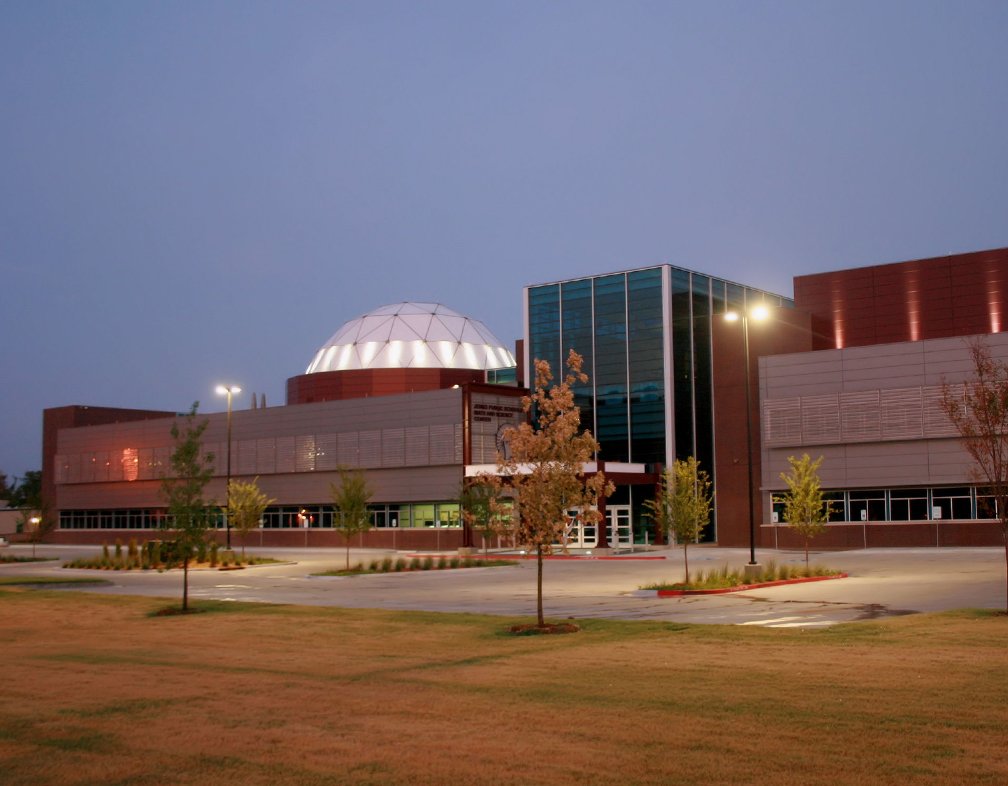
Jenks work leans toward buildings that serve the public. The City Council approved $7 million in August 2023 for a new aquatic research center at the Oklahoma Aquarium, with a lab for coral and shark research and improved holding areas, as News On 6 reported. Special-purpose projects like that ask for stainless and corrosion-resistant finishes, life-support piping, filtration rooms and floors that tolerate constant moisture. We coordinate those systems with the specialists the owner brings, and we make sure the building envelope can handle the humidity inside.
Retail is the other part of the picture. News On 6 reported in July 2023 that construction on Tulsa Premium Outlets, with almost 100 shops, resumed after being halted for several years, just south of the Creek Turnpike near the aquarium and the river. Where a project stalls and restarts, a new contractor has to survey what is built, test what has been exposed to weather and confirm that permits and inspections are still valid. We do that kind of re-entry work carefully, and our retail shopping center page covers the broader approach.
Where a Jenks budget goes
Site work often outweighs expectations on river-adjacent land. Fill to raise a pad, retaining or grading to control runoff, stabilized soil under paving and utility connections across a levee or floodway easement all add cost. Fill must also be placed in lifts and tested, which affects schedule. We show the site package as a separate budget line so the owner can compare parcels.
The building itself follows the usual drivers: structural system, finishes, mechanical and electrical, and the owner's furniture and equipment. For visitor and civic projects, we also budget for accessibility, restrooms and life safety for large crowds, since the occupancy often exceeds what the floor area alone suggests.
Working with a city that is investing in its roads
The City of Jenks reports that the Elm Street widening from 111th to 131st Street, from three lanes to five, costs $16 million under the 2020 General Obligation Bond. Phase 1, from 111th to 121st, started in January 2025 and is expected to finish in February 2027, and the project includes a pedestrian trail, a storm water system and landscaped medians. Anyone building near Elm Street should read the schedule as a constraint and an opportunity: access may change, but the corridor will carry more traffic and a better drainage system.
We contact the city early, review the right-of-way plans, and ask where driveways, easements and utilities will end up. A parcel that is lightly accessible today may have a very different frontage in a year, and we will tell you if the building should be positioned differently. Our design-build delivery approach helps when the site, the road plans and the building need to be resolved together.
Public work and long-lived buildings
Many Jenks owners are public or quasi-public: the city, school district, civic groups and nonprofit operators. For those clients, our government and public sector experience covers bid documents, prevailing procedures, record-keeping and the pace of council approvals. We write schedules that include approval dates, not just construction durations.
Buildings that serve the public should last. We specify durable floors, protected corners and finishes that clean easily, and we leave maintenance access where equipment is installed. The extra care is small at construction time and valuable across the working life of the building.
Moving crews and materials around US-75 work
The state's early November 2026 Tulsa advisory lists a US-75 bridge rehabilitation in Jenks through fall 2026, narrowing northbound and southbound US-75 to one lane each between SH-364 (Creek Turnpike) and 96th Street. If your project depends on deliveries from the north or the turnpike, the lane restriction and the end of the work both belong on the logistics plan.
We schedule concrete placements and large deliveries for off-peak windows, give drivers written routes, and keep a backup route in the plan. When the restriction lifts, we reassess, because the schedule often improves right away. A little flexibility in the calendar prevents a pour from being canceled because a truck sat in traffic. The same routing habits work along the turnpike toward Sapulpa and across the river in Tulsa.
Talk through your Jenks site with us
Send the parcel, the use and the schedule you are working to. We will check the flood and drainage conditions, review the road plans and give you a budget that treats the river and the roads honestly.
Common Questions
Does a Jenks site need a geotechnical report?
Almost always. Soils near the river can be variable, and the foundation, paving and fill design all depend on them. A report before design is inexpensive compared with changes during construction.
How should an owner handle floodplain requirements?
Ask the city for the flood zone and the required finished floor elevation, then have the design team show how the building and parking handle runoff. We review those requirements with you before design and price options that raise the floor or protect equipment.
Will the Elm Street widening change access to my parcel?
It may. The project widens the road from three to five lanes and adds a trail, a storm water system and medians. We review the plans with the city to see how driveways and easements will land and position the building accordingly.
Can you restart a project that stalled?
Yes, with care. We document what has been built, test weather-exposed materials, confirm that permits and inspections remain valid and then update the schedule and budget. Owners get a clear list of what can be kept and what must be redone.
What is special about building aquarium or research spaces?
These spaces involve constant moisture, corrosion-resistant finishes, filtration and life-support systems, and specialist designers. We coordinate those systems with the owner team and protect the building envelope from the interior humidity.