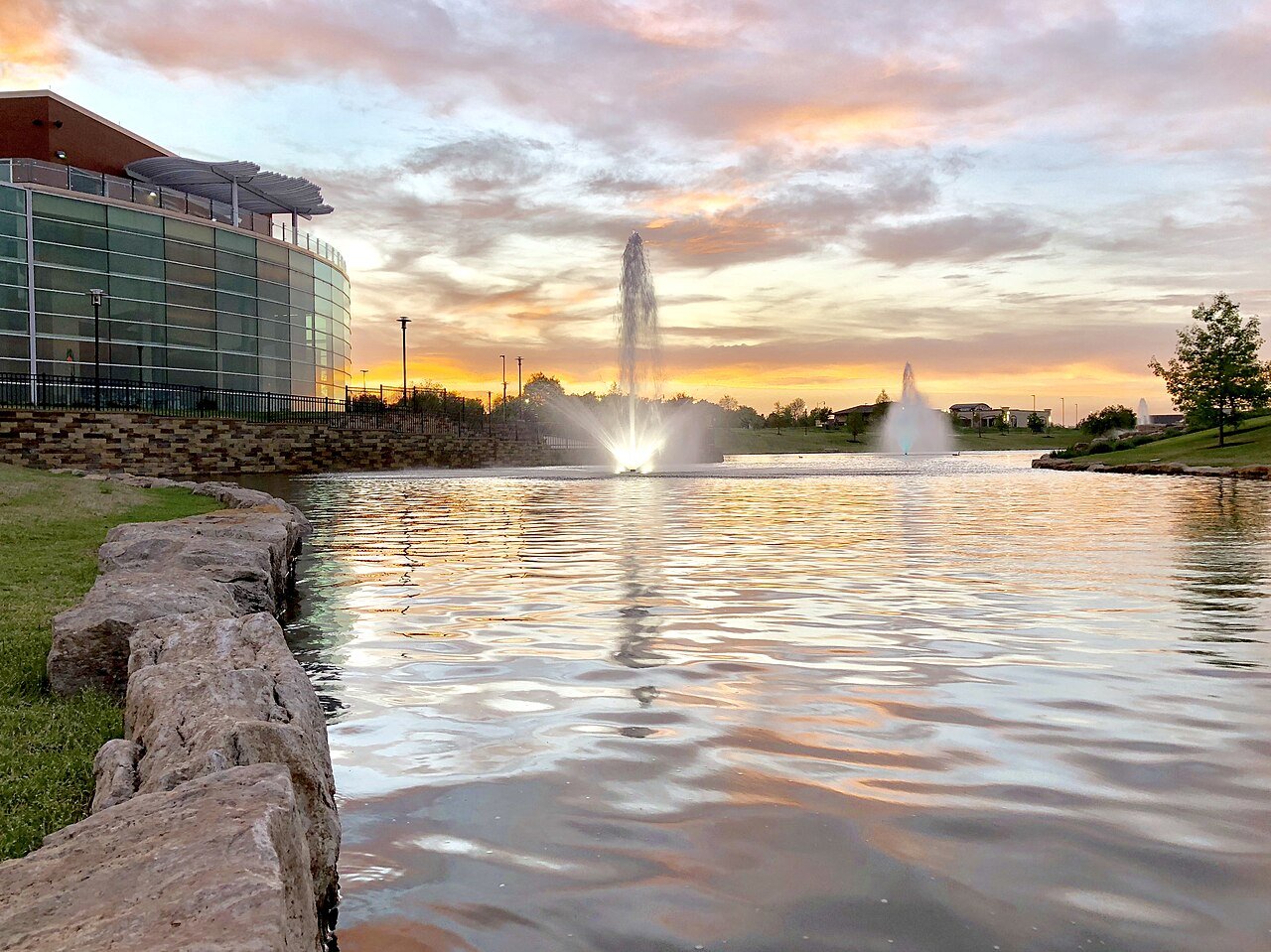
Old oil-field ground needs a second look before a building goes on it, and Glenpool is a place where a careful builder asks about the ground before asking about the floor plan. Published history says the Ida Glenn Number 1 well struck oil on November 22, 1905, starting the Glenn Pool field, which has produced more than 340 million barrels over its life and still produces a small amount using waterflood techniques. We take that as a prompt to investigate each parcel for old wells, pipelines, tank pads and easements.
On the building side, Glenpool is an easy place to explain. The city's economic development page describes it as on Highway 75, a main north-south arterial, 10 miles south of I-44, with shovel-ready land available within city limits for industrial and light industrial uses. Another published source places the city about 15 miles south of downtown Tulsa. Warehouses, trade-contractor shops and small production buildings fit that kind of location well.
We build for owners who want to sit close to Tulsa without paying Tulsa land prices, and we pair that with due diligence on the property that helps the owner avoid unpleasant surprises.
Investigating ground with an oil history
A parcel in an old producing area can contain abandoned wellheads, buried flow lines, filled pits, brine scars or tank battery pads. Not every lot has them, but we check records from the state's oil and gas regulator, review aerial photographs and walk the ground. If a plugged well sits where a building corner would go, the plan shifts the footprint, because no one wants a structure over a wellbore.
Where findings are uncertain, we recommend a geotechnical investigation and, when warranted, an environmental assessment before closing. These are modest costs compared with the building. We present them as ordinary due diligence for any site with industrial history, not as a reason for alarm.
Warehouses, shops and service buildings
The best-fit buildings for a Highway 75 location are small and mid-size warehouses, contractor shops with yards, equipment storage, and light manufacturing. Our warehouse construction begins with product flow: pallets or parcels, trucks or vans, racked or floor-stacked. From that we set clear height, column spacing, doors and office size.
Service companies that need a shop, an office and a secured yard form another part of the market. We design the yard first, because trailers, heavy trucks and equipment sit on it every day. Good drainage, a base that does not rut, lighting and fencing prevent the maintenance costs that wear on small operators.
Rail, air and river in reach
The city says rail service is provided by Burlington Northern and that water transport is available through the Tulsa Port of Catoosa. It also notes that R. L. Jones Airport is nearby and describes it as one of the busiest private airports in the country, with Tulsa International providing passenger and freight air service. Those statements come from the city's own economic development page, and we treat them as marketing descriptions to be verified for a specific operation.
What they mean for a builder is that a Glenpool tenant could plausibly ship by truck, rail, barge or air, and the building should keep that flexibility. We design truck courts and docks to current standards and leave room for rail or barge-oriented tenants to be served from other locations. See the Tulsa Port of Catoosa and Tulsa International Airport aerospace area pages for those sites.
From shovel-ready to ready for tenants
Shovel-ready is a marketing term; every owner should ask what it covers. Does it include zoning, water, sewer, electric, gas, access and stormwater? We check each and write down what is in place and what remains. The result is a list of items to be bought, built or permitted, and a schedule that starts with the longest-lead item.
We then bring the architect, civil engineer and subcontractors into early planning meetings, so the design reflects what can be built efficiently. Early involvement is the best way we know to keep a small project from growing in cost.
Site work and next-door options
Site preparation is often the largest early cost on an industrial lot. Our site development and utilities work includes clearing, grading, utility extensions, detention and paving. We sequence them so heavy trucks do not tear up finished surfaces, and we phase paving to follow the building rather than lead it.
Owners weighing the south metro will also look at Jenks and Bixby, each with different land costs, traffic and customers. We are glad to price the same building in more than one location. Logistics and distribution operators in particular benefit from that comparison.
Safe work on mixed-history ground
Excavation on land with an industrial past calls for extra care. We locate utilities before digging, test unknown soil that smells or looks stained, stop work and notify the owner if we hit an unexpected pipe or tank, and keep trench protection ready on every utility run. Workers get a briefing on what to look for before the first bucket goes in.
Above ground, the same attention applies. Storm preparedness, heat on summer slabs, and truck movement around active shops all get a plan, and the superintendent reviews it every morning with the crew. Safety is easiest to maintain when it is routine and visible.
Weather and ground conditions
Eastern Oklahoma clay is slick when wet and hard when dry, and both conditions affect schedules. We plan earthwork in drier seasons when possible, protect finished subgrade with stone or temporary drainage, and avoid concrete placement when rain or extreme temperature threatens quality.
Ready-mix deliveries from the Tulsa metro reach Glenpool in reasonable time, but we confirm plant capacity and a backup before large pours. Building packages, doors and roofing are ordered as soon as design is approved, so the site is not waiting on a truck that was never scheduled.
Check your Glenpool parcel
Tell us the address or legal description and what you plan to build. We will review the records, walk the site and give you a candid summary of what it will take.
Common Questions
How do you check for old wells or pipelines on a parcel?
We review state oil and gas records, utility locate results and aerial images, and we walk the site. If anything suggests a buried feature, we recommend a surveyor or specialist to locate it. Structures are then placed away from known wells and lines.
Is a Glenpool warehouse cheaper to build than one in Tulsa?
Land may cost less, but the building itself costs about the same. Savings come from lower site and entitlement costs, plus easier truck movement. We compare the total delivered cost, not only the land price.
What does the city's shovel-ready description actually mean for me?
It means land is available in the city for industrial use, but each parcel needs its own check for utilities, access, drainage and zoning. We make that check before design starts and give you a written summary.
Can I build in phases?
Yes. A common approach is to build the shell and a portion of the interior, then finish additional space as tenants arrive. We design utilities and structure to allow that growth and price each phase so you can see the cash needs.
Which building code applies to a new Glenpool commercial building?
The statewide minimum is the 2024 International Building Code, as amended, effective September 14, 2026, with the 2024 International Fire Code adopted statewide on the same date. The city plan reviewer confirms how that applies to your submittal and whether local amendments exist. We ask at the start and carry the answer through the design.