A documented retail trade gap of more than $1.18 billion in Bixby says something simple about the south Tulsa metro: residents are spending money that is not captured by stores in their own backyard, and some of that spending moves through online orders and last-mile deliveries instead. The same story repeats across the metro as new retail districts rise in Broken Arrow, Jenks and elsewhere. Every parcel on its way to a front door passes through a building where picking, packing and sorting happen, and that building has its own construction logic.
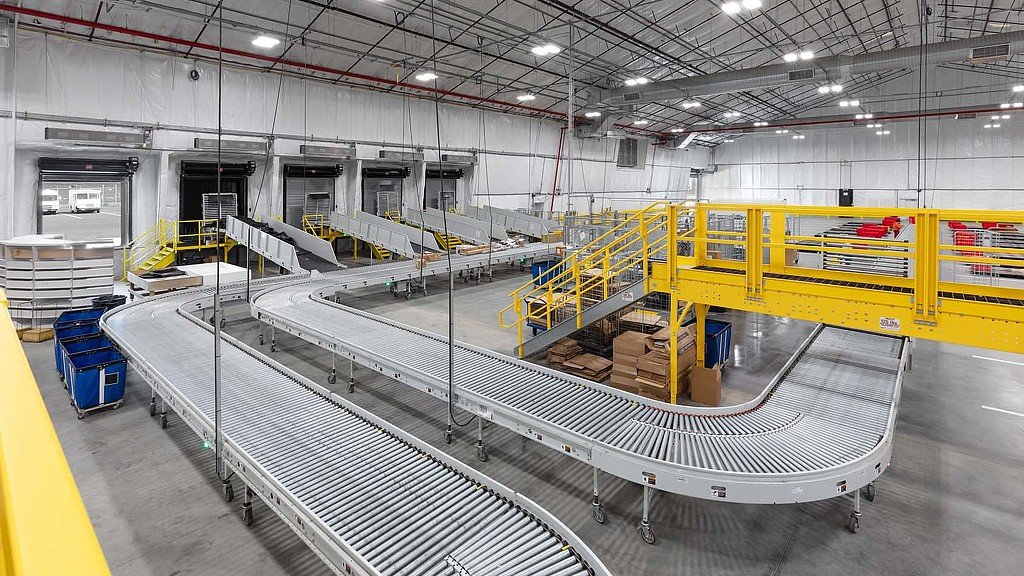
A fulfillment center is a warehouse that has been asked to do much more. It carries more electrical load per square foot than a storage building, because conveyors, sorters, scanners and lighting are everywhere. It often has mezzanines or multiple pick levels, a larger workforce, more parking, a returns area and an outbound parcel dock that runs on tight pickup times. Peak season can double the activity in a building, so layout flexibility is worth real money.
We build fulfillment and e-commerce logistics space for owners and developers in Broken Arrow and the Tulsa metro, from small last-mile stations to larger regional facilities.
Why the east side of Tulsa works for last-mile
Fulfillment follows customers and labor. KRMG reported in April 2026, citing the City of Broken Arrow, that Hackberry Market, at the northeast corner of Aspen Avenue just off the Creek Turnpike, is expected to open in late 2026, and that Adams Creek Town Center in north Broken Arrow is expected to open in May 2027, on 22 acres at East Hillside Drive and 23rd Street. Add the Tulsa Premium Outlets near the Creek Turnpike in Jenks, where News On 6 reported in 2023 that construction resumed on a center of almost 100 shops, and you see a growing retail population that e-commerce operators want to reach quickly.
Glenpool, on Highway 75, states that it has shovel-ready land for industrial and light industrial use, and notes that Tulsa International provides passenger and freight air service. Tulsa Airports reports about 14,000 people working on airport property and plans 700 or more acres of development real estate in a North Development Area. For operators who need airfreight in their network, those facts matter. Our pages on Glenpool and Bixby describe the sites more fully.
Designing for throughput and for change
Fulfillment operators change their equipment every few years, and a building has to absorb that. We design the structure with generous floor loads and a column grid that suits a range of racking and conveyor layouts, then add future capacity where it is cheap: oversized electrical service, conduit stubs, extra slab thickness at likely automation zones and roof structure that can carry added lighting and sprinkler loads.
When an owner plans a mezzanine, we model it early because it affects the structural frame, fire protection, egress and the building code's rules about floor area. A pick module with a mezzanine adds a lot of capacity in a small footprint, but it needs stairs, lifts, sprinklers beneath and a design that satisfies the building official. Our fulfillment and logistics center construction service is organized around those decisions.
Docks, parking and the flow of people
Fulfillment sites have two distinct traffic streams. Trucks and vans use the dock side, with separate lanes for trailers and parcel vans, while employees use a large parking lot that often needs to double during peak season. We design the site so that those streams do not cross, and so that queuing trucks do not spill onto a public street.
Inside, the receiving area, pick zones, pack stations, sortation and shipping dock each want a specific amount of floor. Break rooms, restrooms and training spaces are often larger than owners first expect, especially in a facility that relies on seasonal hiring. Developers who work with us often compare this building to a standard warehouse or a distribution center, and we show where the cost differences come from.
Where fulfillment budgets differ
Power and lighting are the biggest differences from a basic warehouse. High-bay LED lighting, extensive conduit, dedicated panels for conveyors and robotics, and an uninterruptible supply for the control system add to the electrical scope. Fire protection can also cost more where mezzanines, high-piled storage and plastics pull in more demanding sprinklers.
The second driver is speed. E-commerce tenants often need the building by a hard date before peak season, and that pushes owners to commit to long-lead items early. We help owners decide which items to order before the design is complete, using the approach in our long-lead procurement service. We also remind owners that unemployment in Bixby is reported at 2.5 percent, so labor-intensive operations should plan for competitive wages and amenities, and the building should reflect.
Labor, training and community
A fulfillment center is a big employer, and its siting depends on whether workers can reach it. Broken Arrow has a technical campus that trains people in mechatronics, CNC machining and truck driving, and Northeastern State University's Broken Arrow campus added lower-division courses in 2026. Operators who invest in those relationships find it easier to hire maintenance technicians and supervisors. Bringing local education leaders into planning early is a low-cost way to start those relationships.
We also ask about neighbors. A building that runs late shifts needs noise controls, lighting that does not spill onto adjoining property and traffic routes that avoid residential streets. Those conversations with the city and the neighbors go better when the owner arrives with a clear plan. This is the kind of work that suits logistics and distribution owners as well as retail operators.
Planning a fulfillment or last-mile site?
Share your volumes, shift sizes and target areas, and we will compare sites, buildings and schedules with you before you commit.
Common Questions
Is a fulfillment center very different from a distribution center?
Both move goods, but a fulfillment center handles individual orders, so it has more pick modules, conveyors, mezzanines and workers per square foot. A distribution center moves pallets and cases to stores or customers in bulk. The difference shows up in electrical, lighting, fire protection and parking budgets.
How much parking do I need?
It depends on shift size and peak-season staffing. Zoning ratios give a minimum, but operators often need more, and shift changeovers can create traffic backups. We help you plan parking based on the largest shift, not the average.
Can an existing building be converted into a fulfillment center?
Sometimes. Check clear height, floor flatness, electrical capacity, sprinkler design and dock count. Converting can be faster than new construction, but upgrades to power and fire protection are often significant.
What schedule should I expect?
A ground-up building usually takes longer than a lease-ready conversion. The long-lead items, including switchgear and sprinkler pumps, often set the date, so we recommend early orders. We provide a sequenced schedule with ordering dates for the equipment on the critical path.