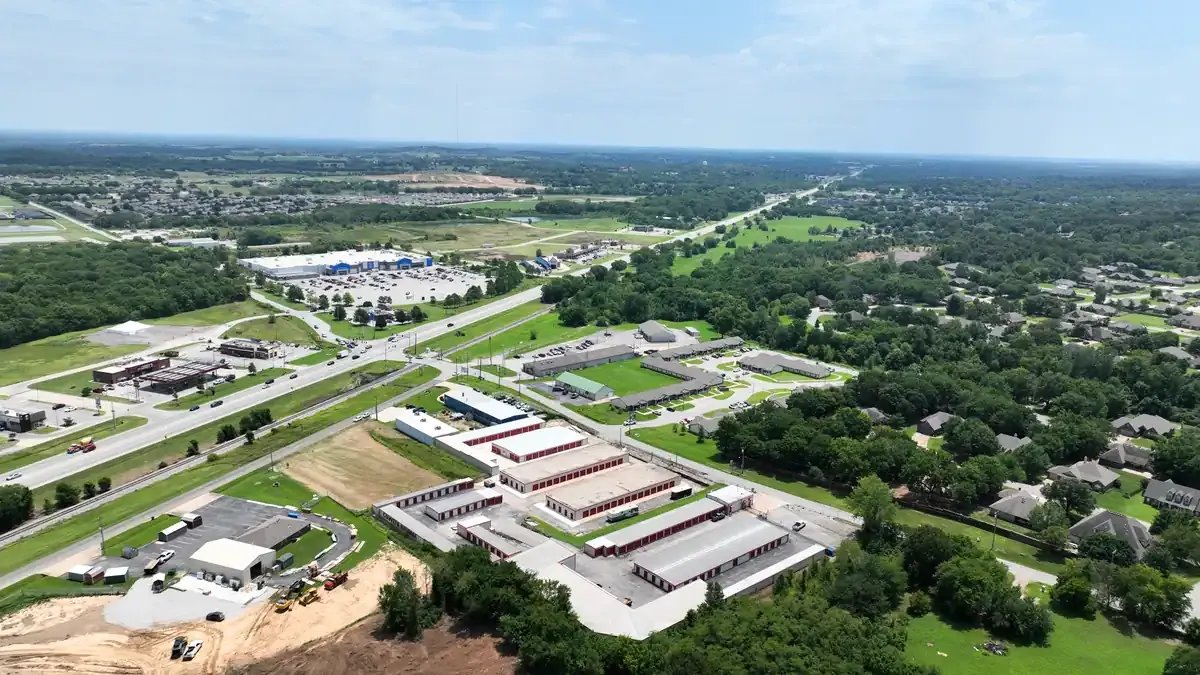
Hotels are built floor by floor, but they are won or lost on the corner of a highway intersection. In Coweta, the intersection of East 131st Street South and State Highway 51 has become a place where a hospitality owner can see what a large project looks like on a suburban edge: wide road frontage, a parking field sized for events and a building that has to serve guests at all hours. We build hotels, restaurants, retail and light industrial space in Wagoner County, and we bring the same planning to each.
The Muscogee Nation broke ground in November 2024, according to Indian Gaming, on a $100 million, 104,000-square-foot casino hotel on 17 acres at that corner. The reported program included a 35,000-square-foot casino floor with 750 gaming machines, a 46-room hotel and 250 new permanent jobs, with a spring 2026 opening planned. We do not claim any role on that project, but its scale tells owners something about the market: large hospitality buildings can be built and operated in Coweta, and the utilities and roads have been asked to carry them.
This page explains how we approach hospitality, retail and industrial work in a town about 30 miles southeast of Tulsa, how we handle the entitlement and utility questions that come with larger sites, and what a withdrawn data center proposal teaches owners about timing.
Distance changes the economics
Wikipedia reports that Coweta is on the Arkansas River, in Wagoner County, and 30 miles southeast of Tulsa. Distance is both a benefit and a cost. Land is usually less expensive than in the core, and highway frontage is more available. At the same time, crews, inspectors, suppliers and specialty trades travel further, and utilities may be farther from the lot line.
We account for the distance by planning trips and deliveries, staging materials on site and scheduling inspections early in the day. We also bring in subcontractors who are comfortable working at that distance, and we price the trip honestly. Owners who compare a Coweta site with one in Bixby or Broken Arrow should have the total project cost on the table, including land, site work and travel.
Hotels, restaurants and the buildings around them
A 46-room hotel is a small building with a long list of systems: guestroom plumbing stacks, packaged terminal air conditioners or a central system, corridor fire alarms, an elevator or two, laundry and a lobby that serves as the front door. Large hospitality projects add banquet space, kitchens and back-of-house corridors. Our hospitality hotel page describes how we sequence these systems so rooms can be inspected and furnished in rhythm.
Around a destination building, other owners want to build too: fuel and convenience stores, restaurants, small retail and service shops. Those projects share the highway and the utilities, and we coordinate the site work so that each owner can build without damaging a neighbor's pavement or drainage. Our hospitality hotel construction service covers the hotel side of that work.
Entitlements and what a withdrawn proposal teaches
OK Energy Today reported on March 31, 2026 that Beale Infrastructure withdrew Project Atlas, a proposed hyperscale data center on 270 acres in Coweta, without giving a reason. We do not speculate about why. We do point out that large projects in any town depend on zoning, utility capacity, public support and financing, and that any of those can change the schedule or end a proposal.
For smaller owners the lesson is practical. Do not buy land on the assumption that a neighboring project will proceed, and do not rely on one tenant or one road project to carry your pro forma. We help owners confirm zoning, utilities and access in writing before they close, and we phase construction so that the first phase can stand on its own. Statewide, commercial projects follow the 2024 International Building Code as amended, effective September 14, 2026, and we confirm with local reviewers which path applies.
Where the money goes on an edge-of-town site
On a highway-corner site, the underground work often costs more than owners expect. Water service for a hotel must carry domestic demand and fire flow, sanitary sewer must be sized for guestrooms, laundry and kitchens, and electrical service must be sized for lighting, cooling and elevators. When a utility is far from the property line, the extension can rival the cost of a floor of the building. The trade partners for site development and utilities price those runs early so that the pro forma is based on real numbers.
Pavement is the second large item. Parking and drive lanes for a hospitality project cover acres, and thicker sections near dumpsters, loading and fire lanes add cost. We offer options for asphalt and concrete, explain maintenance differences and recommend where the extra thickness is worth it. A small amount of money spent on subgrade preparation avoids rutting and patching in the first five years.
Parking, lighting and the guest experience
A hospitality or event site works only if cars move well. We lay out entrances with turn lanes where the road authority requires them, queue space for valet or shuttle service, accessible parking near entries and lighting that makes walking safe at night. Paving sections are designed for delivery trucks and buses, not just cars, because a single weak spot at the dock apron will fail within a few seasons.
Landscape and signage are also part of the build. We coordinate irrigation, monument signs and site lighting with the electrical design so conduit is placed before paving and the finished site looks complete on opening day. Our hospitality group clients tell us those details drive reviews as much as the rooms do.
Sequencing a hotel from site to opening
The usual order is site work and underground utilities, foundations and slab, framing or structure, dry-in, rough-in, drywall, finishes, and then furniture, fixtures and equipment. We schedule inspections ahead of each close-in, because a failed inspection after drywall is expensive. Long-lead items such as elevators, kitchen equipment, switchgear and guestroom casework are ordered at the start of construction.
Hotel brands and operators have their own standards, and the opening date is tied to hiring, marketing and bookings. We keep the owner's operator in the weekly meeting and share a lookahead that shows what is coming, which decisions are needed and which deliveries are at risk.
Plan your Coweta project with us
Tell us the site, the use and your target opening. We will check zoning, utilities and access, price the building and give you a schedule that accounts for the distance.
Common Questions
Is building in Coweta more expensive than in Tulsa?
Not necessarily. Land and entitlement costs may be lower, but travel, utility extensions and trade availability can add cost. We give owners a total budget including those items.
What should I verify before buying land for a hotel?
Zoning, utility capacity, road access and the franchise or operator requirements. We review these with you before closing and provide a rough site-work budget.
How long does a small hotel take to build?
Many take most of a year or more from site work to opening, depending on size, structure and weather. Long-lead equipment and inspections drive the date, so we order and schedule them early.
What happens if a neighboring project is canceled?
It can change traffic, utilities and the market you expected. We recommend planning your first phase so it can stand alone and confirming road and utility improvements with the agencies responsible.
Can you coordinate with a road or turnpike agency?
Yes. We handle access permits, traffic control plans and utility coordination, and we keep the agency informed of construction schedules near its right-of-way.